

Daily Checklist for Real Estate Agents
WHY EVERY REAL ESTATE AGENT NEEDS A DAILY CHECKLIST
One of the biggest challenges of being a real estate agent is figuring out how to spend your time productively, especially when you don’t have any active clients. Unlike a traditional job where someone assigns your daily responsibilities, running your own real estate business requires you to decide what needs to be done and hold yourself accountable for doing it. Without a plan, it’s easy to spend hours checking email, scrolling through social media, or working on activities that don’t actually help you generate business.
A daily checklist for real estate agents can help you stay focused on the activities that matter most. Instead of beginning each morning wondering what you should do, you’ll have a clear reminder of your priorities, including following up with leads, maintaining relationships, and completing the marketing activities you’ve chosen for your business. Over time, those consistent actions can help you build a reliable pipeline of prospective clients.
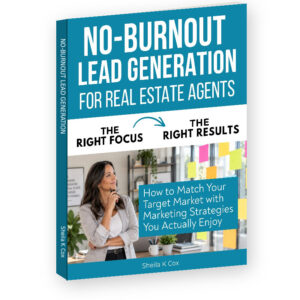
However, your daily checklist shouldn’t become an overwhelming collection of tasks that leaves you exhausted or feeling guilty about everything you didn’t accomplish. That’s the opposite of what I recommend. In my NO-BURNOUT LEAD GENERATION FOR REAL ESTATE AGENTS guide, I teach you how to build a marketing system around your strengths, target market, schedule, and budget. The Daily Checklist included in the guide helps you put that system into action without trying to do every possible lead generation activity.
START YOUR DAY WITH YOUR GOALS AND CALENDAR
Before you begin working on your daily marketing activities, take a few minutes to review your goals and calendar. Knowing what you want to accomplish and what commitments you already have will help you make better decisions about how to use your available time. If you have client appointments, inspections, contract deadlines, or other important responsibilities, you’ll need to plan your lead generation activities around those commitments.
I recommend setting aside a consistent period each day for focused business development. For some agents, that might be a few hours in the morning before appointments begin. Others may prefer to work on their marketing in the afternoon or evening, particularly if they’re building their real estate business while working another job. The specific time matters less than developing a schedule you can realistically maintain.
During your designated work periods, minimize unnecessary distractions so you can concentrate on the task at hand. You might silence nonessential notifications, avoid checking social media unrelated to your work, and schedule routine administrative tasks for another time. However, don’t make yourself unavailable to active clients or new prospects who need timely responses. The goal is to protect your productivity while remaining responsive to the people who depend on you.
MAKE LEAD FOLLOW-UP A DAILY PRIORITY
Following up with prospective clients is one of the most important activities in your real estate business. When someone contacts you about buying or selling a home, responding promptly can make a significant difference in whether that person chooses to work with you. A prospect who doesn’t hear back may simply contact another agent, particularly when they’re actively researching properties or preparing to make a real estate decision.
Your daily checklist should remind you to review new inquiries, respond to messages, and follow up with prospects who have previously expressed interest in your services. Depending on the situation, your goal may be to answer questions, provide useful information, understand the person’s real estate needs, or schedule an appointment. Not every lead will be ready to buy or sell immediately, so maintaining an organized follow-up process is important.
It’s also helpful to record where your leads originate. Did someone contact you after visiting your website, attending an open house, receiving a referral, or seeing one of your social media posts? Understanding which marketing activities produce inquiries—and eventually clients—can help you make better decisions about where to invest your time and money.
Remember that follow-up should be respectful and consistent with applicable communication laws, including Do Not Call requirements and rules governing automated calls and text messages. Repeatedly contacting someone who hasn’t responded isn’t necessarily productive, and you should honor requests to stop communicating. A professional follow-up system focuses on maintaining appropriate contact and providing value rather than pressuring prospects.
CULTIVATE RELATIONSHIPS WITH YOUR SPHERE OF INFLUENCE

One of the most valuable sources of future business is your sphere of influence—the people who already know you. This group may include friends, relatives, former coworkers, neighbors, past clients, and other personal or professional acquaintances. These relationships can generate referrals and repeat business, but people won’t necessarily remember that you’re a real estate agent unless you maintain contact with them.
In my No-Burnout Method, I call this the Cultivating strategy. Rather than constantly chasing strangers for leads, you’re developing and maintaining relationships with people who already have some connection to you. The objective is to remain top of mind so that when someone needs real estate assistance—or knows another person who does—they think of you.
Your daily checklist should include time for maintaining these relationships. That might involve calling someone to catch up, sending a birthday message, meeting a friend for coffee, sharing useful local information, or simply checking in with someone you haven’t spoken to recently. The best approach depends on the relationship and how that person prefers to communicate.
However, these conversations shouldn’t revolve entirely around real estate. People generally appreciate genuine interest in their lives more than repeated requests for referrals. Ask about their families, careers, hobbies, and activities. When appropriate, you can mention something interesting happening in your real estate business or offer useful information about the housing market. The goal is to strengthen the relationship, not turn every conversation into a sales pitch.
My NO-BURNOUT LEAD GENERATION FOR REAL ESTATE AGENTS guide explains how to organize your contacts, identify your VIPs, develop a consistent communication schedule, and incorporate Cultivating activities into your daily routine. These systems help you maintain relationships without relying on your memory or constantly wondering whom you should contact next.
USE SOCIAL MEDIA TO STAY VISIBLE AND CONNECTED

Social media can support your real estate marketing by helping you stay connected with people you already know and introducing your business to prospective clients. Platforms such as Facebook, Instagram, and LinkedIn give you opportunities to share information, participate in conversations, and remind your contacts that you’re actively working in real estate. However, you don’t need to spend hours on social media every day to maintain a professional online presence.
If you’re using social media primarily to support your Cultivating strategy, focus on maintaining genuine relationships. You might comment on a friend’s accomplishment, respond to someone’s question, congratulate a former coworker, or share an interesting update from your community. These small interactions can help you remain connected without requiring you to create elaborate marketing content.
It’s also appropriate to share occasional information about your real estate business. New listings, successful closings, market updates, community events, and educational articles can remind your contacts about the services you provide. Just avoid making every post an advertisement. A mix of personal interaction and relevant professional information will generally feel more natural than a constant stream of sales messages.
The amount of time you devote to social media should reflect your overall marketing plan. If Digital Marketing is one of your primary strategies, you may choose to invest more time in content creation and online engagement. If you’re focusing on Cultivating, Farming, or Networking, social media may play a smaller supporting role. The important thing is to use it intentionally rather than allowing it to consume time you could spend on more productive activities.
SHARE USEFUL BUSINESS AND COMMUNITY CONTENT
In addition to maintaining personal relationships, you may want to use your business profiles to share information that prospective clients find valuable. Real estate marketing doesn’t have to consist entirely of listing advertisements. In fact, educational and community-focused content can help demonstrate your knowledge and give people a reason to pay attention to your business.

For example, you might highlight a neighborhood amenity, explain a local housing market trend, share information about a community event, or answer a question that buyers and sellers frequently ask. If you’re concentrating on a particular neighborhood or geographic area, this type of content can reinforce your local expertise and help prospective clients associate you with that market.
You can also share useful information from reputable local organizations, such as city governments, chambers of commerce, parks departments, and community associations. When sharing content created by others, respect copyright restrictions and follow the platform’s sharing rules. If you’re publishing listing photographs or property information, make sure you have the necessary permissions and comply with MLS and brokerage advertising requirements.
Consistency matters, but that doesn’t mean every agent needs to publish a business post every day. A manageable schedule of useful, relevant content is better than an ambitious posting plan you abandon after a few weeks. Choose the platforms and posting frequency that make sense for your target market and the amount of time you’re willing to invest.
WORK ON YOUR WEBSITE IF DIGITAL MARKETING IS YOUR STRATEGY
If you’ve chosen Digital Marketing as one of your primary lead generation strategies, your daily or weekly checklist may include activities related to your real estate website. These might involve developing educational articles, improving neighborhood pages, updating market information, or creating resources that answer questions your target market is likely to search for online. Over time, useful website content can help prospective clients discover your business through search engines.
However, building a successful real estate website requires patience and consistent effort. Publishing a few articles won’t automatically generate a steady stream of leads, and search engine visibility depends on many factors beyond how frequently you post. It’s generally more effective to create accurate, helpful content that serves a clearly defined audience than to publish large quantities of generic articles simply to meet an arbitrary posting goal.
Website marketing also isn’t necessary for every real estate agent. If you prefer developing relationships through your sphere of influence, networking activities, or neighborhood farming, you may decide to concentrate your efforts elsewhere. You should still maintain a professional online presence so prospective clients can research you, but that doesn’t mean you need to become a full-time blogger.
My NO-BURNOUT LEAD GENERATION FOR REAL ESTATE AGENTS guide helps you evaluate Digital Marketing alongside the other primary strategies so you can decide whether building a lead-generating website makes sense for your personality, target market, available time, and budget.
TRACK YOUR LEAD GENERATION ACTIVITIES AND RESULTS
One of the advantages of using a daily checklist is that it creates a record of the activities you’re completing. This information becomes especially valuable when you begin evaluating which marketing efforts are producing results. Without some form of tracking, it’s easy to confuse being busy with making meaningful progress toward your business goals.
I recommend paying attention to both the time you invest in your marketing and the results those activities generate. For example, you might discover that maintaining relationships with your existing contacts produces more appointments than spending several hours creating social media content. Another agent might find that neighborhood farming or educational website articles generate the strongest leads. The results will depend on your market, your audience, and how effectively you implement each strategy.
Don’t expect every activity to produce immediate results. Relationship-based marketing, in particular, may take months before it leads to a transaction. Digital Marketing and Farming can also require sustained effort before you begin seeing consistent inquiries. Evaluate your activities over a meaningful period rather than abandoning a strategy simply because it doesn’t produce a client during the first few weeks.
Your daily checklist should help you develop consistent habits, while your broader marketing plan should help you evaluate whether those habits are moving your business in the right direction. In the NO-BURNOUT LEAD GENERATION FOR REAL ESTATE AGENTS guide, you’ll learn how to connect your marketing activities to measurable goals and adjust your approach based on actual results.
WHAT SHOULD YOU DO WHEN YOU DON’T HAVE CLIENT APPOINTMENTS?
One of the most common frustrations for new real estate agents is having too much unstructured time. When you don’t have buyers to show properties to or sellers preparing to list their homes, it’s tempting to assume there isn’t much productive work to do. In reality, those periods can provide valuable opportunities to build your business and develop the relationships that may generate future transactions.
Once you’ve completed your essential daily activities, you can devote additional time to the marketing strategies you’ve chosen. If you’re using the Farming strategy, that might involve researching your target neighborhood, preparing community marketing materials, or organizing a neighborhood event. If you’re using the Networking strategy, you might attend a professional gathering, develop relationships with local business owners, or participate in an organization that connects you with prospective clients.
Agents using Digital Marketing may spend that time developing website content, creating videos, or improving their online presence. If Cultivating is your primary strategy, you might organize your contacts, schedule relationship-building activities, or reconnect with people you haven’t spoken to recently. Each of these activities can support your business, but you don’t need to do all of them.
That’s an important principle of my No-Burnout Method: choose a manageable combination of marketing strategies and implement them consistently. Trying to pursue every possible lead generation opportunity usually spreads your time and attention too thin. You’ll generally be more effective when you concentrate on activities that fit your strengths and give them enough time to produce meaningful results.
BUILD A DAILY ROUTINE YOU CAN MAINTAIN
A productive real estate schedule doesn’t have to look the same for every agent. Someone who works full-time in real estate may have several hours each day available for marketing and relationship-building activities. A part-time agent may have only a limited amount of time before or after another job. Agents with active clients may also need to adjust their schedules to accommodate showings, inspections, negotiations, and other transaction responsibilities.
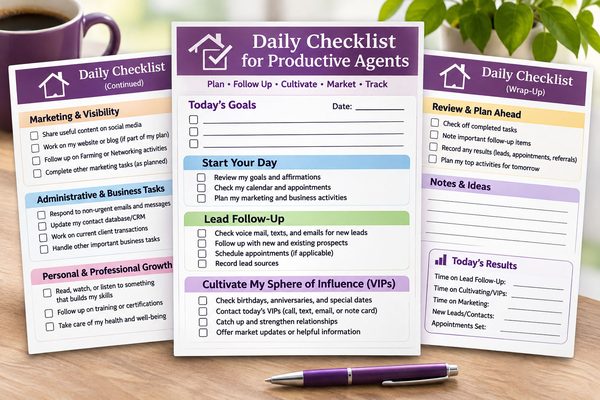
The key is to identify the essential activities that need consistent attention and build them into a routine you can realistically follow. Lead follow-up and maintaining relationships should remain important priorities, while your additional marketing activities should reflect the strategies you’ve selected. Some tasks may need daily attention, while others can be scheduled weekly or monthly.
In my experience, having a written checklist is especially helpful when you’re feeling overwhelmed or aren’t sure what to work on next. Rather than relying on motivation or trying to remember every task, you can refer to your checklist and concentrate on the next important activity. As your business grows, you can refine your routine to accommodate changing responsibilities and new opportunities.
The NO-BURNOUT LEAD GENERATION FOR REAL ESTATE AGENTS guide includes a Daily Checklist designed to support the Cultivating system you’ll establish as part of your marketing plan. It gives you a repeatable structure for following up with leads, maintaining VIP relationships, staying visible, and tracking your activities. You’ll also learn how to incorporate additional marketing strategies without overwhelming your schedule.
You can find the printed NO-BURNOUT LEAD GENERATION FOR REAL ESTATE AGENTS guide and its separately available digital toolkit in the Agent Success Builder Shop.
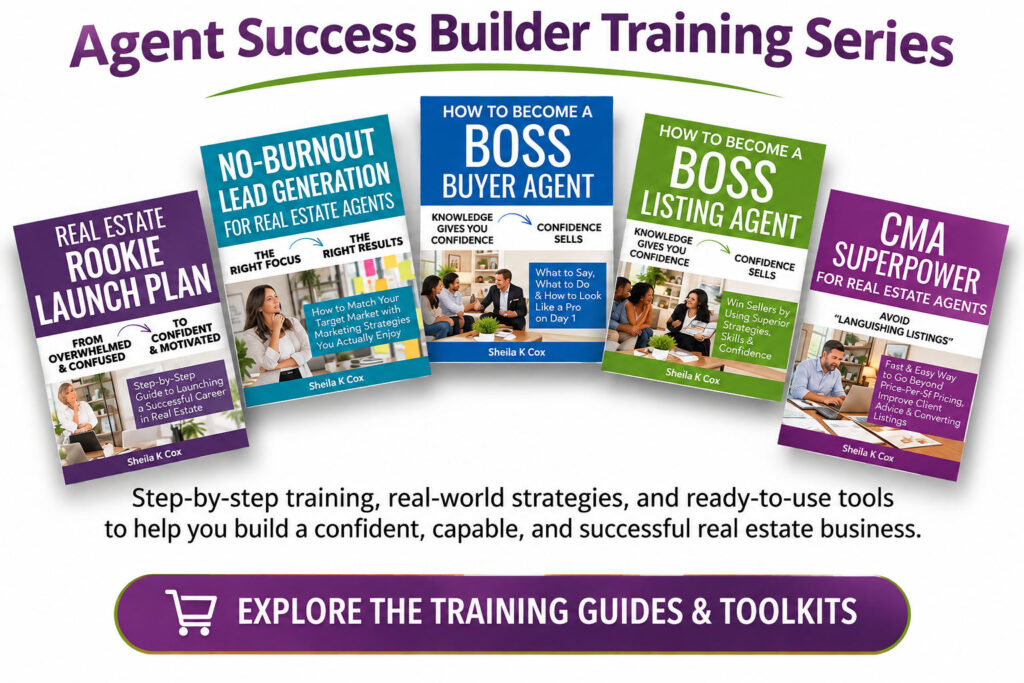
Ready to take your real estate career to the next level? Whether you’re just getting started or looking to strengthen your skills, the Agent Success Builder Training Series gives you the real-world knowledge, step-by-step guidance, and ready-to-use tools you need to build a successful real estate business.
Stop wasting time trying to figure everything out on your own. Explore our Training Guides and Digital Toolkits and find the resources that will help you become a more confident, capable, and successful real estate agent.