

How to Do a CMA in Real Estate–Price Houses Like a Pro
HOW TO DO A CMA IN REAL ESTATE: A GUIDE FOR REAL ESTATE AGENTS
Learning how to do a CMA in real estate is one of the most important skills you can develop as a real estate agent. Whether you’re helping buyers determine how much to offer on a home or advising sellers about an appropriate listing price, your clients depend on you to provide knowledgeable, data-driven pricing recommendations. Without a reliable method for analyzing property values, you risk recommending prices that don’t accurately reflect the home’s characteristics or current market conditions.
Unfortunately, many agents rely too heavily on automated CMA reports or simply calculate an average price per square foot. While these methods can provide useful starting points, they don’t necessarily account for the differences between individual properties or the market conditions that influence what buyers are willing to pay. Two homes with similar square footage in the same neighborhood can have significantly different market values because of their condition, upgrades, location, and other characteristics.
As a real estate agent since 2009, I’ve learned that preparing an accurate comparative market analysis requires more than selecting a few recently sold properties and averaging their prices. You need a consistent methodology for evaluating comparable homes, recognizing important differences, and interpreting local market activity. That’s the approach I teach in my CMA SUPERPOWER FOR REAL ESTATE AGENTS training guide.
WHAT IS A COMPARATIVE MARKET ANALYSIS IN REAL ESTATE?

A Comparative Market Analysis (CMA), sometimes called a Competitive Market Analysis, is a method real estate agents use to estimate a property’s current market value. It involves researching comparable properties, analyzing recent sales, evaluating differences in property characteristics, and considering the conditions of the surrounding real estate market. The objective is to develop a reasonable estimate of what a property might sell for under current market conditions.
A CMA is not the same as a formal appraisal. Appraisals are performed by qualified appraisers using established valuation standards, while CMAs are generally prepared by real estate agents to help buyers and sellers make informed pricing decisions. Although the two processes share certain valuation principles, they serve different purposes and may use different methods and reporting requirements.
For sellers, a well-prepared CMA provides the foundation for recommending a competitive listing price. For buyers, it helps evaluate whether a property’s asking price is reasonable and supports decisions about making an offer. In both situations, your analysis should be based on relevant market evidence rather than assumptions, personal preferences, or the price someone hopes a property will command.
WHY AN ACCURATE CMA IS IMPORTANT FOR BUYERS AND SELLERS
When you’re representing a seller, your pricing recommendation can have a significant impact on how quickly the property attracts buyers and whether it ultimately sells. An overpriced listing may generate limited interest, remain on the market longer than competing properties, and eventually require price reductions. Pricing too low without a sound strategy may also create problems, particularly if the seller doesn’t understand the property’s potential market value. Your responsibility is to explain what the available evidence suggests and help the seller make an informed decision about the asking price.
Buyer representation presents a different challenge. Your clients need to understand whether the home they’re considering is reasonably priced before deciding how much to offer. This becomes especially important when a property has desirable features, significant upgrades, or an asking price that differs substantially from recent neighborhood sales. A carefully prepared CMA helps you explain the pricing evidence and discuss an offer strategy that reflects the buyer’s objectives and current market conditions.
Financing can also influence the transaction. When a buyer obtains a mortgage, the lender generally requires an appraisal to evaluate the property as collateral for the loan. If the appraised value is lower than the contract price, the transaction may require additional negotiations, changes to financing, or other solutions. A CMA cannot guarantee the outcome of an appraisal, but a well-supported pricing analysis can help clients better understand potential valuation concerns before entering into a contract.
HOW TO CHOOSE COMPARABLE PROPERTIES FOR A CMA
One of the most important parts of preparing a CMA is selecting appropriate comparable properties, commonly called comps. These are properties that share important characteristics with the home you’re evaluating and provide useful evidence of what buyers have recently paid for similar homes. Choosing the wrong comparables can distort your analysis, even when your calculations are mathematically correct.
When evaluating potential comparables, consider their location, size, age, construction style, condition, amenities, and other characteristics that may influence market value. Properties within the same subdivision or neighborhood may be especially relevant, but geographic proximity alone doesn’t guarantee that two homes are comparable. A completely remodeled home with premium finishes, for example, may not provide a reliable direct comparison for a similar-sized property that needs extensive updating.
Recent closed sales are generally an important source of pricing evidence because they show what buyers actually paid for properties. However, the relevance of those sales depends on the market, the property’s characteristics, and how conditions may have changed since the transactions closed. In some markets, you may have several excellent comparables available, while in others you’ll need to evaluate a wider selection of properties and exercise additional judgment.
Active and pending listings can also provide valuable context. Active listings help you understand the competition a seller may face, while pending properties may indicate current buyer activity and demand. However, pending contract prices generally aren’t publicly available until closing, and asking prices shouldn’t be treated as equivalent to completed sales. Each category provides different information that should be interpreted appropriately.
My CMA SUPERPOWER FOR REAL ESTATE AGENTS guide explains how to identify, evaluate, and select comparable properties using a structured MLS research process. The goal is to help you develop a defensible pricing recommendation rather than simply accepting whichever properties an automated system selects.
WHY AUTOMATED CMA REPORTS AREN’T ALWAYS ACCURATE
Many MLS systems and real estate technology platforms offer automated CMA reports. Tools such as Cloud CMA and REALTORS Property Resource (RPR) can help agents organize property information, review comparable sales, and produce professional-looking reports. These tools can save time, particularly when you’re preparing information for a client presentation.
However, an attractive report doesn’t necessarily mean the underlying valuation is accurate. Automated systems may not fully recognize important differences in property condition, quality, upgrades, or location. Even when a platform provides adjustment capabilities or valuation estimates, those results depend on the available data, the properties selected, and the assumptions used in the analysis.
For example, two homes may have similar square footage, bedroom counts, and construction dates, but one might have a recently remodeled kitchen, updated bathrooms, and a swimming pool. The other might have outdated finishes, deferred maintenance, and a less desirable location within the neighborhood. Treating those properties as essentially identical could lead to a misleading pricing recommendation.
That’s why I recommend learning how to evaluate comparable properties independently rather than relying exclusively on automated results. Once you understand the underlying methodology, technology becomes a useful tool for organizing and presenting your research—not a substitute for your professional judgment.
UNDERSTANDING CMA PRICE ADJUSTMENTS
One of the more challenging aspects of preparing a CMA is accounting for differences between the subject property and the comparable homes. These differences may involve features that add value, characteristics that reduce desirability, or variations in condition and quality. The objective is to consider how those differences may influence what a typical buyer would be willing to pay.
Common property characteristics that may affect value include swimming pools, garage capacity, finished basements, lot size, views, renovations, and overall condition. Location can also influence value, even within the same neighborhood. For example, a home backing to a busy road may appeal to a different group of buyers than an otherwise similar property overlooking a park or greenbelt.
However, you shouldn’t assume that every feature contributes its original construction cost to a home’s market value. A $75,000 swimming pool doesn’t automatically increase a property’s value by $75,000, and an expensive renovation may not produce an equivalent increase in the eventual sales price. The market determines how much buyers are willing to pay for particular characteristics, and those amounts can vary considerably by location and price range.
Learning how to evaluate these differences is an important part of developing your CMA skills. In CMA SUPERPOWER FOR REAL ESTATE AGENTS, I explain the process of comparing property characteristics and making supported pricing adjustments so you can move beyond simplistic averages and develop more meaningful valuation estimates.
HOW LOCAL MARKET CONDITIONS AFFECT HOME PRICING
Even an excellent selection of comparable properties won’t tell you everything you need to know about pricing a home. You also need to understand what’s happening in the surrounding real estate market. A property that might attract multiple offers in a market with limited inventory could experience a very different response when buyers have numerous competing homes to choose from.
Market conditions influence buyer behavior, negotiating leverage, and the relationship between asking prices and final sales prices. That’s why I recommend examining local market statistics before finalizing a pricing recommendation, particularly when you’re preparing a CMA for a seller. Understanding whether the market is becoming more competitive or slowing down can help you interpret recent sales and evaluate the property’s current competition.
Understanding months of inventory
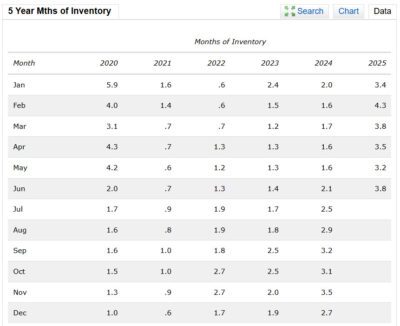
One useful statistic is months of inventory, sometimes called months of supply. It estimates how long the current inventory of homes would take to sell at the recent pace of sales, assuming no additional homes entered the market. Generally, lower inventory levels suggest stronger competition among buyers, while higher inventory levels may indicate that buyers have more choices and sellers face greater competition.
However, a single inventory figure doesn’t tell the entire story. It’s important to consider how inventory has changed over time and how current conditions compare with previous periods. You should also examine the appropriate geographic area and property category because conditions can vary significantly between neighborhoods, price ranges, and housing types.
Other market statistics worth understanding
In addition to months of inventory, I recommend becoming familiar with statistics such as days on market, sales activity, median sales prices, and the relationship between listing prices and closing prices. Each provides a different perspective on market conditions. For example, increasing marketing times combined with growing inventory may suggest that sellers are facing more competition, while shorter marketing times and limited inventory may indicate stronger buyer demand.
These statistics should be considered together rather than interpreted in isolation. Changes in the mix of properties sold can affect median prices, seasonal activity can influence sales volume, and small neighborhoods may produce volatile results when only a few homes sell during a particular period. Historical trends are useful for understanding market direction, but they cannot predict future conditions with certainty.
My CMA SUPERPOWER FOR REAL ESTATE AGENTS guide teaches you how to analyze MLS market statistics and incorporate market conditions into your pricing recommendations. This is an important distinction between simply producing a comparable sales report and preparing a comprehensive market-based valuation.
HOW PROPERTY CONDITION AFFECTS A CMA
Another important consideration is the subject property’s overall appearance and condition. Buyers don’t evaluate homes solely by square footage, bedroom count, or construction date. They also respond to the condition of the property, the quality of its finishes, the functionality of its floor plan, and the amount of work they believe will be necessary after purchasing it.
For example, a well-maintained home with updated finishes, attractive landscaping, and minimal deferred maintenance may compete differently from a similar property with worn flooring, outdated fixtures, and visible repair needs. These differences can influence both the price buyers are willing to pay and how quickly a property attracts serious interest. However, the value of specific improvements or deficiencies must still be evaluated in the context of comparable properties and local buyer preferences.
When you’re preparing a CMA for a seller, seeing the property in person can provide information that isn’t available through public records or previous MLS listings. Photographs and property descriptions are helpful, but they may not accurately reflect the home’s current condition. A property visit allows you to observe its overall presentation and identify characteristics that should be considered when comparing it with competing homes.
In CMA SUPERPOWER FOR REAL ESTATE AGENTS, I explain how to evaluate property appearance and condition as part of the pricing process. The goal is to help you recognize meaningful differences between properties and determine how those differences should influence your final pricing recommendation.
HOW TO DEVELOP A DEFENSIBLE CMA PRICE RECOMMENDATION
After researching comparable sales, evaluating property differences, and analyzing local market conditions, you’ll need to bring the information together into a reasonable pricing recommendation. This is where your research and professional judgment become especially important. Rather than relying on a single calculation, you should consider the strength of the comparable sales evidence, the property’s competitive position, and how current market conditions may influence buyer behavior.
For sellers, your analysis should help explain an appropriate listing price or price range and the reasoning behind your recommendation. For buyers, it should provide useful evidence for evaluating the asking price and developing an offer strategy. In either situation, you should be prepared to explain the comparable properties you selected, the important differences you identified, and the market information that influenced your conclusions.
Remember that a CMA is an estimate of market value, not a guarantee of what a property will sell for. The final sales price depends on many factors, including buyer demand, property presentation, competition, negotiations, financing, and changing market conditions. A strong CMA helps clients make better-informed decisions, even though it cannot eliminate uncertainty from a real estate transaction.
BUILD YOUR CONFIDENCE WITH A CONSISTENT CMA METHODOLOGY
Preparing accurate comparative market analyses is a skill that improves with training and experience. The more you study comparable properties, evaluate market trends, and observe how homes actually sell, the better you’ll become at recognizing the factors that influence market value. However, experience alone isn’t necessarily enough. You also need a repeatable process that helps you evaluate properties consistently and explain your recommendations clearly.
That’s why I created CMA SUPERPOWER FOR REAL ESTATE AGENTS. The guide goes beyond the basic comparable sales reports that many agents learn to prepare. It provides a structured approach to selecting comparable properties, evaluating meaningful property differences, analyzing local market conditions, and developing pricing recommendations for both buyer and seller clients.
Whether you’re a newly licensed agent preparing your first CMA or an experienced agent who wants to strengthen your pricing skills, developing a more systematic approach can help you become a more confident and capable real estate professional. You’ll be better prepared to discuss property values with clients, explain your recommendations, and support important pricing decisions with relevant market evidence.
Explore CMA SUPERPOWER FOR REAL ESTATE AGENTS and see what’s currently available in the Agent Success Builder Shop.

Ready to take your real estate career to the next level? Whether you’re just getting started or looking to strengthen your skills, the Agent Success Builder Training Series gives you the real-world knowledge, step-by-step guidance, and ready-to-use tools you need to build a successful real estate business.
Stop wasting time trying to figure everything out on your own. Explore our Training Guides and Digital Toolkits and find the resources that will help you become a more confident, capable, and successful real estate agent.