

Crafting the Perfect Real Estate Agent Bio–Stand Out, Get Noticed, Win More Clients
WHY YOUR REAL ESTATE AGENT BIO MATTERS
Writing a compelling real estate agent bio is an important part of building your professional brand and marketing your real estate business. Whether someone finds you on Google, visits your brokerage website, or looks at your profile on Zillow, Realtor.com, or LinkedIn, your bio helps them understand who you are, what services you provide, and why they might want to work with you. For many prospective clients, your online profile is one of their first opportunities to evaluate you as a real estate professional.
Think about what happens when someone recommends a real estate agent to a friend. Before contacting that agent, the person may search for their name online, read reviews, visit their website, or look through their social media profiles. Your bio helps create that important first impression. If it contains little more than generic statements about providing excellent customer service and helping people achieve their dreams, it probably won’t give prospective clients much reason to remember you.
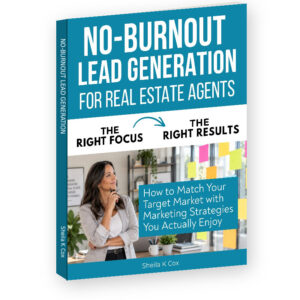
A strong real estate bio does more than describe your background. It communicates the clients you serve, the problems you help them solve, and what makes your approach different from other agents. This is why I recommend developing your target market and core marketing message before writing your profile. In my NO-BURNOUT LEAD GENERATION FOR REAL ESTATE AGENTS guide, creating your professional bio is part of a larger branding process designed to help you attract the right clients with marketing that fits your business.
START WITH YOUR TARGET MARKET IN MIND
Before you start writing your real estate agent bio, you need to know who you’re trying to reach. Are you focusing on first-time homebuyers, homeowners in a particular neighborhood, relocating professionals, investors, or people interested in new construction? Different types of clients have different concerns, priorities, and expectations. A profile written for first-time buyers will probably emphasize different services and qualifications than one intended to attract luxury home sellers.
When you understand your target market, you can communicate the information that matters most to those prospective clients. For example, buyers relocating from another state may appreciate an agent who provides detailed neighborhood information and helps them understand the local housing market. Sellers in an established neighborhood may be more interested in your knowledge of local property values, pricing strategies, and marketing services. Your bio should help prospective clients recognize that you understand their particular situation.
This doesn’t mean you can only work with the type of client described in your profile. Choosing a target market is a marketing decision, not a restriction on the clients you can serve. It simply helps you create a more focused and recognizable professional identity rather than trying to appeal equally to everyone. My NO-BURNOUT LEAD GENERATION FOR REAL ESTATE AGENTS guide explains how to identify and evaluate a target market before developing your branding and marketing messages.
DEVELOP YOUR CORE MARKETING MESSAGE FIRST
One of the biggest mistakes agents make when writing their bios is starting with their personal history instead of thinking about what prospective clients need to know. While your background and experience may be important, your readers are primarily interested in how you can help them. That’s why I recommend developing your core marketing message before attempting to write your profile.
Your core messaging should communicate your target market, your value proposition, and the key characteristics that distinguish your services from those of competing agents. Your value proposition explains the benefit clients receive from working with you, while your differentiators provide reasons to believe that you can deliver that benefit. These might include specialized market knowledge, a particular service approach, relevant professional experience, or resources you’ve developed to help clients through the transaction.
For example, simply saying that you’re dedicated to exceptional customer service doesn’t tell prospective clients much because almost every agent makes a similar claim. Explaining that you provide detailed neighborhood research, personalized home tours, and organized communication throughout the buying process gives readers a clearer picture of what working with you might look like. The difference is that you’re describing meaningful services rather than relying on vague promises.
In my NO-BURNOUT LEAD GENERATION FOR REAL ESTATE AGENTS guide, you’ll develop your core messaging before writing your bio. The guide includes a Core Messaging Worksheet and a profile/bio template that help you turn those branding decisions into a consistent professional introduction.
STRUCTURE YOUR REAL ESTATE BIO AROUND YOUR CLIENTS
A well-written real estate agent bio should have a logical flow that makes it easy for readers to understand your professional identity. Rather than treating it like a traditional résumé, think of your profile as a brief introduction to your real estate services. It should establish whom you serve, what you help those clients accomplish, and what makes your approach valuable.
Your professional background and qualifications should support that message rather than dominate it. If you’ve been a real estate agent for many years, your experience may be an important differentiator. If you’re newly licensed, you may have relevant skills from a previous career that help demonstrate your ability to communicate, organize projects, solve problems, or provide knowledgeable service. The important thing is to connect those qualifications to benefits your prospective clients can understand.
Your bio should also reflect your personality and communication style. You don’t need to sound overly formal or use complicated marketing language to appear professional. In fact, a conversational, confident introduction may be more effective than a lengthy biography filled with industry jargon. Readers should come away with a reasonably clear understanding of what you do, whom you help, and what they can expect from working with you.
SHOWCASE YOUR LOCAL REAL ESTATE EXPERTISE
Local market knowledge can be a valuable differentiator for real estate agents, particularly when you’re serving buyers and sellers within a defined geographic area. Your bio should help prospective clients understand which communities you serve and what you know about those markets. Depending on your experience, you might mention your familiarity with particular neighborhoods, housing types, local market conditions, or community amenities.
However, simply stating that you’re a local expert isn’t nearly as convincing as providing evidence of your knowledge. If you’ve lived in the area for many years, that background may be relevant. If you’ve developed detailed neighborhood resources, regularly analyze local sales activity, or specialize in a particular community, those activities can help demonstrate the expertise you’re offering. Be specific about your knowledge and experience without exaggerating your qualifications.
Local involvement can also make your profile more personal and relatable. You might mention volunteer activities, community organizations, or other interests that connect you to the area. Just make sure those details support the professional image you want to communicate rather than distracting from the services you provide. Your objective is to help readers see you as a knowledgeable, approachable professional who understands their real estate needs.
INCLUDE RELEVANT SKILLS, EXPERIENCE, AND CREDENTIALS

Your professional qualifications can help establish credibility, but you don’t need to include every accomplishment or credential you’ve ever earned. Focus on the information that’s most relevant to your target market and the services you’re promoting. Depending on your background, this might include years of real estate experience, professional designations, client service awards, specialized training, language skills, or experience working with particular types of properties.
If you’re a new real estate agent, don’t feel that you need to apologize for your limited transaction experience or pretend to have expertise you haven’t developed yet. Instead, identify the strengths you bring from your previous career and explain how those skills can benefit your clients. For example, experience in education may demonstrate your ability to explain complicated information, while a background in project management may support your ability to coordinate the many details involved in a real estate transaction.
Above all, make sure your claims are accurate and can be supported. Avoid implying that you’ve personally completed transactions handled by your brokerage or team if that isn’t true. Be careful with awards, certifications, and designations, and make sure you comply with your state’s advertising regulations and your brokerage’s policies. A professional bio should establish trust through accurate information rather than exaggerated claims.
ADD PERSONAL DETAILS THAT SUPPORT YOUR BRAND
Although your real estate bio is primarily a marketing tool, it shouldn’t read like a corporate advertisement. Including a few personal details can help prospective clients get a sense of your personality and decide whether they might enjoy working with you. Your hobbies, interests, community involvement, and professional background can all contribute to that impression when they’re relevant to the audience you’re trying to reach.
For example, an agent who specializes in golf course communities might mention an interest in golf, while an agent who works extensively with relocating buyers might share their own experience moving to the area. Someone who volunteers with local organizations may want to include that involvement because it reflects their connection to the community. These details can create natural points of connection without making your biography overly personal.
Be selective about what you include. Your prospective clients don’t need your entire life story, and personal information shouldn’t overwhelm your professional message. Choose details that feel authentic, reinforce the image you want to communicate, and help readers see the person behind the business.
CREATE A CONSISTENT BIO FOR YOUR ONLINE PROFILES
Once you’ve written your real estate agent bio, you’ll probably use it in several different places. Your brokerage website, Google Business Profile, Realtor.com, Zillow, LinkedIn, Facebook, Instagram, and other platforms may all provide opportunities to introduce yourself to prospective clients. Because each platform has different formatting requirements and character limits, you’ll likely need more than one version of your profile.
I recommend creating a complete professional bio that can serve as your master version, along with shorter variations for platforms that provide limited space. You don’t need to use exactly the same wording everywhere, but your target market, core message, professional identity, and important differentiators should remain consistent. Someone who encounters your LinkedIn profile and later visits your brokerage website should recognize that both represent the same real estate professional.
Consistency also applies to your profile photographs, contact information, and branding. Use a recognizable professional headshot, keep your business information current, and make sure your profiles reflect the same general positioning. You don’t have to establish a presence on every social media platform, but the accounts you maintain should accurately represent your business and make it easy for prospective clients to learn more about you.
The online presence section of NO-BURNOUT LEAD GENERATION FOR REAL ESTATE AGENTS explains how to establish your essential business profiles and maintain consistent branding across the platforms you choose to use. This is important even if Digital Marketing isn’t one of your primary lead generation strategies because prospective clients may research you online regardless of how they first hear about your services.
SHOULD YOUR REAL ESTATE BIO INCLUDE A TAGLINE?
A tagline is a short, memorable phrase that reinforces your professional identity or the value you provide to clients. It might emphasize your local expertise, your service philosophy, a particular type of client, or a benefit associated with working with you. When used consistently, a well-chosen tagline can help people remember your brand and recognize your marketing materials.
However, a tagline is optional, and you shouldn’t feel obligated to invent one simply because other agents use them. A vague phrase that could apply to virtually any real estate professional doesn’t necessarily strengthen your marketing. If you choose to create a tagline, it should support your core messaging and communicate something meaningful to your target market.
For example, an agent who specializes in a particular city might use a tagline that emphasizes local knowledge, while an agent who focuses on first-time buyers might highlight guidance and education. The best choice depends on the clients you’re trying to attract and the professional identity you want to establish. My NO-BURNOUT LEAD GENERATION FOR REAL ESTATE AGENTS guide includes examples of different tagline approaches to help you decide whether one would benefit your branding.
PROOFREAD YOUR BIO AND KEEP IT CURRENT
Before publishing your real estate agent bio, review it carefully for accuracy, clarity, and tone. Read it aloud to see whether the language sounds natural and conversational. If it feels stiff, exaggerated, or filled with marketing clichés, revise it until it sounds more like the way you would introduce yourself to a prospective client. You may also want to ask your broker, mentor, or a trusted colleague to review it and provide feedback.
Pay particular attention to how your bio might be interpreted by someone who doesn’t already know you. Does it clearly explain the type of real estate services you provide? Can readers identify the geographic area you serve? Do your qualifications and differentiators support the promises you’re making? If someone has to work hard to figure out what makes you different from other agents, your message probably needs more focus.
Finally, remember that your bio should evolve as your real estate business develops. You may change your target market, earn new credentials, develop specialized expertise, or refine your service offerings over time. Review your profiles periodically and update them when necessary so your online presence continues to reflect your current business.
MAKE YOUR REAL ESTATE BIO PART OF A COMPLETE MARKETING SYSTEM
Your real estate agent bio is an important branding tool, but it isn’t a complete marketing strategy by itself. A well-written profile helps prospective clients understand who you are and why they might want to work with you. However, you’ll still need a marketing system that puts your name and services in front of the right people and gives them opportunities to connect with you.
That’s why I recommend approaching your bio as one component of your overall marketing plan. Your target market, core messaging, professional branding, and lead generation activities should all work together. When those elements are aligned, you’ll be better positioned to attract clients who appreciate the services you provide rather than constantly trying to appeal to everyone.
My NO-BURNOUT LEAD GENERATION FOR REAL ESTATE AGENTS guide walks you through developing that larger marketing system, beginning with your target market and continuing through your core messaging, professional branding, marketing plan, and lead generation strategies. It also includes a profile/bio template to help you develop a professional introduction based on the branding decisions you’ve already made.
You can explore the printed NO-BURNOUT LEAD GENERATION FOR REAL ESTATE AGENTS guide and its separately available digital toolkit in the Agent Success Builder Shop.
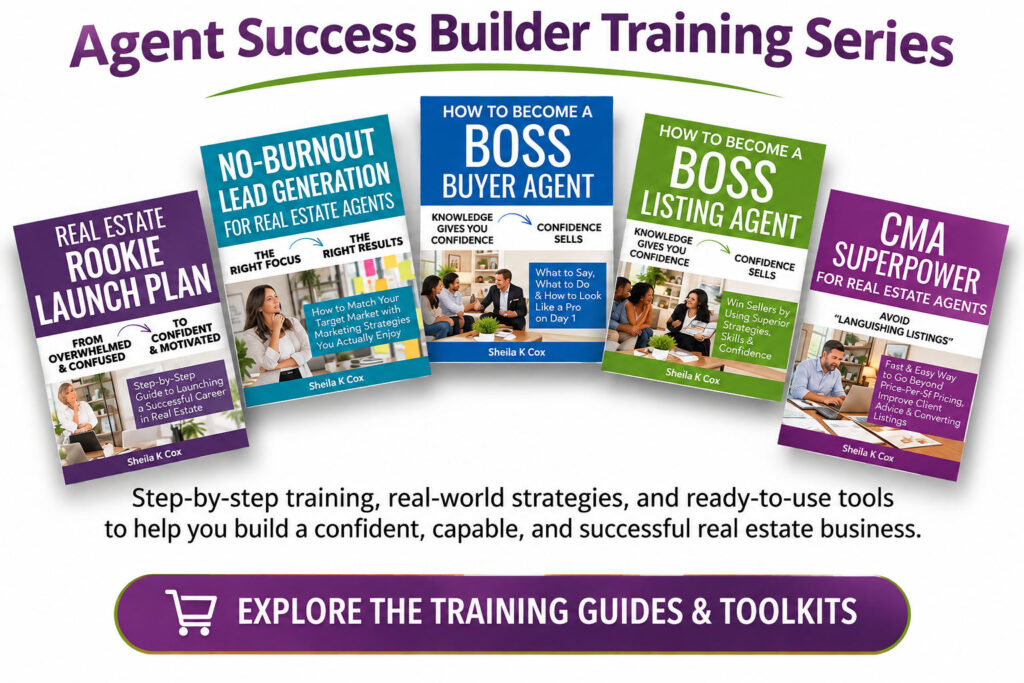
Ready to take your real estate career to the next level? Whether you’re just getting started or looking to strengthen your skills, the Agent Success Builder Training Series gives you the real-world knowledge, step-by-step guidance, and ready-to-use tools you need to build a successful real estate business.
Stop wasting time trying to figure everything out on your own. Explore our Training Guides and Digital Toolkits and find the resources that will help you become a more confident, capable, and successful real estate agent.