ultimate buyer's agent kit

How to Become a Real Estate Buyers Agent

Go from Struggling to Confident Buyer’s Agent — Build a Buyer System & Close More Deals

To be successful, you really need to learn how to become a real estate buyers agent. When you’re a new real estate agent, it’s MUCH easier to attract and sign home buyers than home sellers. So the sooner you set up your complete buyer system, the sooner you’ll get paid.

The Ultimate Buyer’s Agent Kit has everything you need to wow buyers, prove your value, and win signed agreements with ease—whether you’re new, experienced, or somewhere in between. This isn’t some cutesy package designed by someone who’s never sold a house. This kit was designed by a top-producing buyer’s agent with a Five-Star reputation…so you know it works!

Based on 15+ years of real-world experience with buyers (see reviews), this kit contains everything you need to learn how to become a real estate buyers agent. Whether you’re a brand-new agent or you’ve been struggling to turn leads into clients, this kit gives you the tools, scripts, and confidence to finally take control of the buyer process and start Closing more deals.

Only $149!


30-DAY MONEY BACK GUARANTEE!


How To Become a Real Estate Buyers Agent

The Ultimate Buyer’s Agent Kit is a complete system to teach you how to become a real estate buyers agent. It will show you how you educate buyers, build trust fast, and make signing your buyer agency agreement the obvious next step.

Every done-for-you tool is ready to use and fully customizable, so you can plug them into your business today and start closing more clients tomorrow. Stop struggling to call buyers the first time, meet with them and get buyer representation agreements signed, plan home tours, show houses, and manage buying transactions all the way to the Closing table. This kit will teach you how to become a real estate buyers agent AND provide all the essentials for you to be a BOSS buyer’s agent NOW.


Why Agents Love This Kit

  Look Professional Even On Day 1 – You will look professional with these tools…even if you’re a brand new agent.

  Save Time – Ready-to-use and fully customizable. Start using today!

  Boost Your Confidence – You’ll always know what to say, send, and do next.

  Prove Your Value – Buyers see exactly why you’re worth hiring.

  Get Signed Agreements with Ease – The easiest way to convince buyers they MUST sign with you. 🙂

  Increase Your Closings – More signed agreements mean more commissions.

  Ease Your Mind – These checklists and transactions forms, plus the 70+ page guide, will help you do all the right things and don’t miss an important step in the transaction.


Here’s What’s Inside the Kit

Here’s everything you need to learn how to become a real estate buyers agent. These are the same tools that I use in my own 15-year, five-star, top-producer real estate business (see reviews).

how to become a real estate buyers agent


16 Digital Files to WOW! Your Buyers:

Once you purchase the kit, you’ll be able to download all of the following digital files. The Microsoft Word (DOCX) and PowerPoint (PPTX) files are easily customizable with your name, contact info, photo, logo, etc. Instructions and How-To videos are included to show you how.

  • Training Guide: The Essentials for Working with Home Buyers (70+ page PDF)
  • Buyer Presentation (PowerPoint Slideshow PPTX)
  • Buyer Presentation Script (PDF)
  • Buyer Brochure – Packet (DOCX)
  • BONUS! Buyer Brochure – Printable (DOCX)
  • Agent To Do List for Buyers (Buyer Agent Checklist – DOCX))
  • Buyer Checklist for Buying a Home (DOCX)
  • Buyer Contact Sheet (Intake Form) (DOCX)
  • Client Tracking Sheet (DOCX)
  • Info About New Home (DOCX)
  • Moving Survival Kit (DOCX)
  • New Construction Home Estimate (DOCX)
  • New Construction Home Offer (DOCX)
  • Planning the Move (DOCX)
  • Remodeling Estimate Worksheet (DOCX)
  • Kit Instructions (PDF) & How-To Videos

See the details about these items below…


1. Training Guide: “The Essentials for Working with Home Buyers”

how to become a real estate buyers agent guideMaster the entire buyer process from the very first phone call to the closing table. The Essentials for Working With Home Buyers 70+ page training guide gives you complete, step-by-step instructions to confidently attract, convert, and serve today’s buyers. Instead of guessing your way through showings, contracts, and negotiations, you’ll know exactly what to say, what to do, and how to stand out as the trusted professional buyers want on their side.

Inside, you’ll learn how to become a real estate buyers agent and discover proven strategies for prequalifying prospects, planning flawless home tours, presenting your value, and guiding clients through every stage of the transaction. You’ll also learn how to set boundaries, handle tough conversations, and build a reputation as the agent who protects clients’ best interests at every turn.

This guide covers important topics you are unlikely to read anywhere else. Others tell you WHAT to do, this tells you HOW.

  • Understanding Home Buyers—get the inside scoop on what motivates buyers and how they choose their agent.
  • Preparing to Work with Home Buyers—how to put together everything you need (brochures, slideshow, handouts, transaction forms).
  • Handling the Initial Contact with a Buyer—what to say when you first talk with a buyer, how to categorize (hot, warm, cold), and the exact follow-up process for each type of buyer.
  • Planning a Home Tour—gathering documents, setting appointments, preparing the buyer packet, and more.
  • Meeting Buyer Clients the First Time—how to deliver the Buyer Presentation and get a signed agreement.
  • Showing Houses to Clients—who should drive, what to say, common strategies, how to end, and what to do afterwards.
  • Facilitating the Home Buying Transaction—how to manage a buyer transaction from offer to acceptance, through inspections, title and loan, all the way to the Closing and beyond.
  • Attracting Home Buyers—helpful ideas for generating buyer leads.
  • Practicing Scripts
  • APPENDIX—Includes 30-Day Roadmap to Becoming a Buyer’s Agent and the complete Buyer Agent Checklist to manage your buyer transactions.


Reading this training guide is like having your own real estate coach, teaching you everything you need to know about working with home buyers.  Not just the WHAT but also the HOW.


2. Buyer Presentation (Slide Deck)

Stop hoping buyers will sign—show them why they should. Use this professional PowerPoint presentation at your first meeting with buyers to position yourself as a trusted expert. Use the presentation to walk clients through the buying process, agency and representation, compensation, and your value-added services. By the final slide, they’ll be ready to commit because they’ll see your expertise and the value that you provide.

3. Buyer Presentation Script

Deliver your pitch with confidence every time. This word-for-word script shows you exactly what to say and when, making your presentation smooth, natural, and persuasive. With this script, even brand new agents can effectively explain the home buying process (and all the value you add!), agency and representation, fiduciary duty, agent compensation, and more. Buyers can’t help but be impressed and see you as THE best buyer’s agent available.

4. VIP Brochure of Your Value-Added Services

Show buyers—clearly and convincingly—why they need you. This customizable brochure transforms your service list into a polished, professional marketing piece. Email it to warm up prospects, post it on your website, or share it on social media to build your credibility. This brochure is designed to highlight 22 unique high-value services that you provide, so buyers instantly see you’re worth hiring. Put your photo and logo on the cover and, just like that, you look like a PRO!

buyer brochure

5. Buyer Contact Sheet

Your lead conversion blueprint for first contact. This 2-page form walks you through every step of your first buyer interview, ensuring you ask the right questions, identify serious prospects, and capture all essential details. Includes the correct follow-up process for each type of lead: Cold, Warm, and Hot, so you always know what to do next with each buyer lead.

6. Buyer’s Checklist for Buying a Home

Set accurate expectations from day one. This checklist outlines the buying process so buyer clients know exactly what to expect. Hand it out at the first meeting, and then customize it later (with contract deadlines) to keep your buyers organized and stress-free.

checklist for buyers

7. Agent’s 101+ To-Do List for Buyer Clients

Show buyers exactly what you do to earn their trust—and your commission. This detailed checklist reveals over 100 tasks you perform, instantly proving your value and reinforcing your professionalism. Most buyers think agents “just show houses” but this proves that you do a lot of things they don’t see, behind the scenes, to make the home buying process as smooth and easy as possible for them.

Plus, this detailed checklist keeps you on track (even if you’re new) so that you manage the entire transaction successfully. You don’t have to worry about how to manage the buyer transaction…this details every step.

8. New Construction Offer Instructions

Take the stress out of new construction deals. With this ready-to-use form, you’ll gather every critical detail from your buyer and hand the builder’s sales agent everything they need to draft the contract correctly. No missed details. No scrambling at the last minute. Plus, it guides you through the key talking points you’ll want to cover with your clients before they commit—so you look prepared, confident, and in control. Pair it with the New Construction Estimate of Costs to give your clients clarity on builder options and upgrades right from the start.

9. New Construction Estimate of Costs

Show buyers you’ve thought of everything. This powerful form helps you quickly and accurately estimate the true cost of a new construction home—upgrades, options, and all. Instead of vague ballpark numbers, your clients get a professional breakdown they can trust. With just a few adjustments for your local market, you can deliver a polished worksheet that makes you look like an expert while saving clients from surprise expenses down the road.

10. Home Remodeling Estimate

Turn “fixer upper” fears into confident decisions. With this tool, you’ll walk buyers step by step through the real costs of remodeling—so they know exactly what they’re getting into before they make an offer. Whether it’s paint, flooring, landscaping, or major upgrades, you’ll have a clear, customized estimate ready. Go even further by providing your curated list of trusted local vendors, proving that you’re not just a buyer’s agent—you’re their full-service homeownership advisor.

11. Information About Your New Home

Add value long after the contract is signed. Gather insider details from the seller and present them in a personalized packet your buyers will love. It’s a thoughtful touch (which other agents don’t even think about) that builds loyalty and referrals.

12. Planning the Move

Be the agent who makes moving easier. This ready-to-send PDF provides your clients with a step-by-step moving plan, helping them stay organized during one of the most stressful times of their lives. Another reminder, at the end of the process, that you’re looking out for your buyer clients every step of the way.

13. Moving Survival Kit Checklist

End your client’s journey with a gift they’ll never forget. This checklist shows you how to create a low-cost, high-impact “Moving Survival Kit” filled with practical essentials for moving day. A simple gesture that earns gratitude, referrals, and long-term loyalty.

BONUS! Printable Buyer’s Brochure

A give-away that sells your services when you’re not there. Professionally designed, this brochure mirrors the Buyer Presentation in a concise, client-friendly format. It’s not too long (and won’t cost a fortune to print)…just enough information to impress the buyer and look like THE best buyer’s agent available.

buyers brochure
Sample of the BONUS Buyer Brochure


Easily Customizable for Your Image and Branding

How to become a real estate buyers agent has never been easier! All the tools in this kit are customizable to your image and branding! Helpful How-To videos are included to show you exactly how to customize them in Microsoft Word and PowerPoint. Preset color schemes for the top brokerages can be easily selected, or customize the color scheme for your unique branding.

how to become a real estate buyers agent kit


Why This Kit Works

  Establishes You as The Go-To Buyer’s Agent in Your Market
No matter where you are in your career—brand new, rebuilding momentum, or running a thriving business—this kit gives you the tools to clearly communicate your value. With polished, customizable materials, you’ll stand out as the agent who delivers results, earns trust, and wins signed agreements consistently.

  Enables You to Confidently Guide Buyers from First Contact to Closing
This isn’t a single handout—it’s a complete buyer conversion system. From attention-grabbing brochures and persuasive presentation decks, to detailed scripts, checklists, and client-facing handouts, you’ll have professional tools for every step of the buyer journey.

  Helps You Explain Your Worth and Justify Your Fee with Ease
No more awkward conversations about commissions or services. The Buyer Presentation included in this kit walks clients through exactly what you do, why it matters, and how it protects their best interests—so your value is crystal clear and unshakable.

  Enables You to Deliver a Five-Star Experience That Generates Referrals
When buyers feel informed, supported, and valued, they leave happy. Happy clients leave glowing reviews. And glowing reviews bring new leads. This kit helps you create a smooth, professional process that leaves clients eager to recommend you to everyone they know.


Become a Real Estate Buyers Agent Who Gets Reviews Like These…

If you use this kit to learn how to become a real estate buyers agent, then you will eventually get client reviews that build your referral system.

“Sheila’s quality of service is truly exemplary. To start with, her knowledge of the market and of the real estate purchase process is second-to-none. What’s special is that she was able to explain everything in such a clear and concise way that gave us so much confidence. The high quality of Sheila’s video tours of the houses is truly amazing. We just could not match the level of attention to detail even if we visited the house in-person. Being out-of-state buyers this meant that we had full confidence. Sheila’s responsiveness, efficiency and just looking out for our interests as buyers is incredible. The examples are too many to list here. But issues from large to small, often times she will be addressing those and consulting with us before we’d even thought of these issues ourselves. We are truly fortunate to have worked with such an amazing realtor on purchasing our house. Thank you Sheila!”


“Sheila has a vast knowledge of the local real estate market and shared it with us in many useful forms throughout the entire home-buying process. Due to her knowledge and many years of experience, Sheila has superb judgment that was incredibly valuable. Her wealth of videos, guides, and tools helped us learn about the area and the home-buying process. When we had questions about homes or the process, Sheila was incredibly responsive. She was available on short notice to show us homes, and she clearly understood the current state of the market. We are so grateful for Sheila and 100 recommend her to anyone looking for a top agent in the area.”


“…Sheila Cox stands out as a beacon of excellence in real estate. As out-of-town buyers, our experience with Sheila was nothing short of spectacular. The entire purchase process was conducted virtually, yet it felt as if we were right there, thanks to Sheila’s detailed video tours and insightful commentaries. Her in-depth analysis and thoughtful consideration made us feel confident and well-informed every step of the way…The welcome gift we received from Sheila was a delightful surprise that added a personal touch to our experience. It s our third time purchasing a residence, and we can say, without a doubt, that Sheila is the best agent we’ve ever had the pleasure of working with. She exceeded our expectations in every regard. Any buyer lucky enough to have Sheila as their representative will be astounded by her exceptional level of service and her profound knowledge of the area, including the market, schools, locations, and contacts. She truly deserves more than the typical agent commission. Her presence at the home inspection, her assistance with flooring estimates, and her advice on bank wire issues are just a few examples of her dedication. Sheila Cox is not just an agent she s a trusted advisor, a guardian of our investment, and a true ally in our journey of home buying. Thank you, Sheila, for making our real estate experience seamless and successful. -Yang Family”


We were amazed by Sheila. First she made us feel so comfortable looking for a house out of state. Gave us the in’s and out’s of buying a home in Texas. She’s on top of everything and doesn’t skip a beep. Knowledge of Texas was spectacular and if she can’t answer a question then you better believe that she’ll investigate and give you an answer. She’s not afraid to tell you the truth and lays everything out. The one thing I loved was her video’s she taped on houses we were interested in. She looks at every nook and cranny’s of a house, bad or good. In our books she’s a super star and Texas should be proud of her. Shelia you are amazing. Thank you for every minute you gave us to make us feel welcome in Texas!!”


“Sheila provided our family with a house purchasing experience that no other realtor has ever matched. To say she’s outstanding is an understatement. Her knowledge, patience, grit, wisdom, attention to detail and high level of integrity is a home buyers dream. She made our transition from Georgia to Houston, TX seamless and smooth. We wouldn’t recommend anyone else. Thank you Sheila for going above and beyond.”


Learn How to Become a Real Estate Buyers Agent Today!

Stop chasing buyers.
Start converting them. 

Get your Ultimate Buyer’s Agent Kit now and turn every buyer lead into a loyal, committed client.Only $149!


30-DAY MONEY BACK GUARANTEE

I think you’ll love my Ultimate Buyer’s Agent Kit, but if not, we’ll give you a full refund…no questions asked. So you’ve got nothing to lose and so much to gain.


If we haven’t met yet…

Hi, I’m Sheila Cox!

I love helping real estate agents SUCCEED in this business. I know you can achieve your dreams and aspirations…you just need a little help from a PRO.

I have been a licensed real estate agent in Texas since 2009 (so please excuse my accent 🙂 ) and I have received the Five-Star Real Estate Agent award every year since 2010. I’m told that less than 1 percent of all real estate agents can claim this achievement. I mention it because this award is based on client satisfaction and don’t you want to learn from someone who actually knows what they’re doing?!

I still remember how lost, confused, and overwhelmed that I felt when I started my real estate career. Back then, I thought I would learn everything that I needed to know from my broker. I was wrong. My first broker didn’t have ANY formal training class. And my second broker’s training just “scratched the surface.” (And I’ve worked for some of the biggies.)

Of course, when you’re new, you don’t know what you don’t know. So I have created a lot of FREE resources, and some training books, courses, and products to help agents like you SUCCEED. These are resources that you won’t see anywhere else because I developed them. They are based on the tools and systems that I use in my own real estate business. And unlike most of the “training” you’ve seen before, my stuff doesn’t just tell you WHAT to do, but it also shows you HOW to do it.
(Finally!)


become the local real estate expert 2

How to Become the Local Real Estate Expert

Dominate Your Market with Local Expertise

Learning how to become the local real estate expert is important−here’s why. All real estate agents in your area (your competition) are selling the same products as you: the same houses and the same location. The key differentiator—the way you can set yourself apart from the pack—is your expertise in your product. It’s so obvious, yet this is probably the most overlooked aspect of your real estate training.

If you want to be a great real estate agent, you need to be a real estate expert in two areas:

  1. Your market area (location)
  2. Your product (residential housing)

So you can either choose to acquire this expertise very slowly over the next few years (like most real estate agents) or you can use The Easy Way to Become the Local Real Estate Expert guide and develop your expertise as quickly as possible.
CLICK TO DOWNLOAD

The sooner you become a product and market expert, the sooner you will succeed in this business. This is what the veteran real estate agents have that you don’t have. This is what will set you apart from your competition.

Acquiring this knowledge will give you the confidence you need to attract new clients. Plus, the information that you gather in this chapter will be used in the future as you promote yourself on social media.

Learn About Your City

Even if you have lived in your area a while, you may not know it as well as you need to as a real estate agent. While you don’t need to know all the in’s and out’s of your city just because you live there, clients will expect you to have in-depth knowledge regarding the city where you work. They will ask you about schools, taxes, amenities, parks, drive times, etc. If you can’t easily answer those questions, then it’s likely they will move onto a real estate agent who can do so.

To become the local real estate expert, take some time and fill-in the City Worksheet located in The Easy Way to Become the Local Real Estate Expert guide. That worksheet includes the must-know information that clients expect you to be very familiar with.

You can look up most of this information on the Internet. Good places to start include:

  • City’s .gov website
  • Chamber of Commerce website
  • Google maps
  • School district website
  • Greatschools.org

DOWNLOAD The Easy Way to Become the Local Real Estate Expert

Learn About the Public Schools in Your Area

Clients will also expect you to know a lot about the local schools in your area.

What is the name of the local school district?

_____________________________________

Are there other school districts in your local area?

_____________________________________

How do these school districts compare? (Use schooldigger.com to get a comparison)

Check the school district websites in your area, and print copies of the school zone maps, one each for:

  • Elementary schools
  • Middle schools
  • High schools

If your area includes multiple school districts, collect the zoning maps for each district.

To become the local real estate expert, use www.Greatschools.org to make a list of the schools in your area and their ratings. Use a Word document with a table that will enable you to sort the list in various ways:

  • By Type (Elementary, Middle, High)
  • By Type, then Rating
  • Alphabetically

Once you know the ratings of the schools, handwrite those ratings on your printed school zone maps. Study the areas that have the highest-rated schools and the areas with the lowest-rated schools.

Learn About the Local Neighborhoods

Your primary market area may consist of single-family neighborhoods, high- and mid-rise condo buildings, or townhome complexes. To simplify things, they will all be referred to as “neighborhoods.”

profitable real estate marketIf you don’t already know your area very well, use the How to Find a Profitable Target Market guide. Or you may be able to figure out the most popular neighborhoods in your primary area, by doing an Internet search for:

  • “Best places to live in YOURCITY”
  • “YOURCITY neighborhoods”
  • “New construction homes in YOURCITY”

New construction neighborhoods should be at the top of the list because they will have a lot of purchasing activity.

You can also look at local real estate agent websites and see how they are segmenting the primary market on their websites.

Once you know the popular neighborhoods in your area, you should do some Internet-based research to fill in a Neighborhood Worksheet for each of the top neighborhoods/buildings—one set of worksheets for each neighborhood/building. If you do one or two neighborhoods a week you will be the local real estate agent in no time!

DOWNLOAD The Easy Way to Become the Local Real Estate Expert

After you complete the City Worksheet and all the Neighborhood Worksheets that you need, use a three-ring binder and make a Neighborhood Notebook. Put the filled-in worksheets, summary pages, and builder information in the notebook. This is something that you can carry with you on tours.

Advice for Touring Your Area

You should drive your area and visit the various city and neighborhood amenities to get a first-hand view of them. You will be more comfortable showing clients homes in your area, if you know where everything is (schools, parks, hospitals, pools, golf courses, etc.) and if you have seen them, in-person, at least once.

There are two ways you can tour your area:

  • All at once on 3-5 day tour
  • One neighborhood/building per week

All At Once Tour

After you fill in your worksheets and are ready to tour your area, print a Google map and write the various places that you want to visit on the map. Then plan the order you will tour those places.

become the local real estate expertPlan three to five days in good weather to go on your tour (depending on the size of the city and the number of neighborhoods you are touring). Take photos and video clips of each neighborhood. For video clips, just pan your camera from left to right for each item (clubhouse, swimming pool, tennis courts, etc.) creating 5-15 second video clips. You can then use your photos and video clips for interesting social media posts later on.

Weekly Tour

You don’t have to tour your area all at once. You can visit just one or two neighborhoods/buildings per week. You still need to gather the same information, photos, and video clips as listed above, but you will only do one or two neighborhoods at a time. If you are a part-timer, it may be easier for you to do weekly tours rather than touring the entire area all day for 2-3 days.

About Touring Individual Houses

A lot of real estate training books and courses, including your broker training, will tell you to tour 10-20 homes per week. This is not efficient or effective. Individual houses are here today and sold tomorrow, but the amenities, parks, schools, etc. are here to stay, so focus on touring those places first. Being super-familiar with your neighborhoods will give you a lot of confidence when you are working with clients.

City Images to Collect

You should take photos and video clips when you are touring the area. Collect as many as possible but keep in mind that more can be added later.

For the best photos, try to tour the city on a sunny day in the spring or summer.

A video clip is usually only a 5 to 15 seconds video, either panning a scene from left to right, or starting zoomed in on the subject and then slowly zooming out.

There’s a helpful list of city images/video clips to collect in The Easy Way to Become the Local Real Estate Expert guide.

Neighborhood Images To Collect

You should also take photos and video clips for each of your top neighborhoods. To get the best photos, try to tour neighborhoods on sunny, non “trash days,” in the spring or summer.

There’s a helpful list of neighborhood images/video clips to collect in The Easy Way to Become the Local Real Estate Expert guide.

Learn About Home Construction

In addition to learning the local area to become the local real estate expert, you also need to be an expert in your product.

Real estate agents sell homes…that’s our product. It may be single-family homes, townhomes, farm and ranch properties, high-rise condos, but they are all homes.
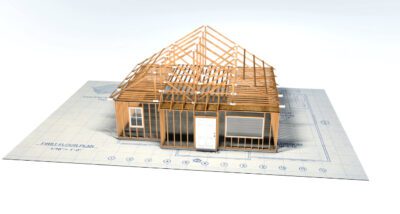
You should have at least intermediate knowledge of home construction, materials, systems, architectural details, and potential defects so that you can discuss them with clients when you are out showing houses or on listing appointments. The more knowledge you have, the more confidence you will project with clients, which builds your credibility with them and makes them want to work with you. No client wants to hire an agent who knows less about homes than they do.

Another reason that you need to know a lot about houses is so you can effectively manage the home inspection process, negotiate repairs, and prepare homes to go on the market to sell, etc.

Here are a few places to start learning about houses, but do some Internet searches to find more:

You can learn a lot of what you need to know by reading articles on the Internet and watching YouTube videos. You should visit home improvement stores and learn about materials and costs. You can purchase books on home construction, improvement, maintenance, and repairs. You should also tour model homes and ask builder’s sales agents to tell you about their features and benefits. If possible, ask a veteran agent in your office to go on a tour of a few homes in the area. Choose homes that have been on the market a long time…they probably have issues and defects that the veteran agent can point out to you and teach you what to look for (and avoid).

Another way to learn about home construction is to attend home inspections (once you start working with buyer clients) and listen to what inspectors have to say.

Use the checklist in The Easy Way to Become the Local Real Estate Expert guide to keep track of what you need to know about home construction. You want to know the common terms and understand the PROs and CONs, materials, common defects to watch out for, and price ranges for most of the following items. You should be able to confidently discuss these topics with your clients.

You don’t have to learn all these topics at once, but you should schedule time each week to learn about these items and become very knowledgeable about them. The sooner you know this information really well, the sooner you will project an image of confidence when working with clients.

As you go through the learning process, make bookmarks of helpful websites and articles and keep them organized so you can refer back to them when you create social media posts in the future. Whenever you see interesting graphics or photos, download the file, or capture a screenshot as a JPG file, so you can use those items on future social media posts. However, be careful of copyright infringement and always include the source (the URL address) of the information.

Overall, you’ve got to Know Your Product!
People don’t want to hire real estate amateurs; they want to hire real estate experts. Selling real estate is not just about knowing the laws and contracts. You must be knowledgeable about home materials and construction if you want to be a successful real estate agent.


CLICK TO DOWNLOAD

DOWNLOAD THIS GUIDE

Master Your Market and Stand Out With HyperLocal Expertise

Use Local Knowledge to Attract Clients and Close More Deals

If you’re not known as the expert in your market, you’re losing business to someone who is. Buyers and sellers want to work with agents who know the area inside and out—not just someone with a license.

This guide helps you master everything from local amenities and school ratings to sales data, builders, and commute times—so you’re never caught off guard in a client conversation or listing appointment.



choosing profitable target market

Step-by-Step Process for Choosing a Profitable Target Market–From Guesswork to Paycheck

Critical Step for Your Real Estate Business

Choosing a profitable target market may be the most critical step of building your real estate business. However, most real estate agents just randomly pick an area that is close to where they live, spend lots of time and energy marketing in that area, only to fail at their efforts and wonder “what’s wrong with me?” or “what am I doing wrong?”

If you want to skip the hassle of wasting time and effort, then you must take some time to study your area and find out which possible markets will be profitable for you. Don’t base your marketing efforts on assumptions. Use the data in your MLS and do some real market analysis.

This process will help you with your HyperLocal expertise as well.

how to find profitable target market in real estate
CLICK TO DOWNLOAD

Once you find some possible target markets, make sure you narrow it down to the target market that is best for YOU (based on your unique characteristics). Also choose marketing activities that are a good match for your natural personality. This will help you actually ENJOY your marketing activities and prevent burnout.

Learn How to Use Your MLS First

Before you can study sales data in your local market, you have to know how to use the MLS software. Sign up for your MLS training classes as soon as possible. Take all the classes available: basic and advanced. Take online tutorials (if available). You really should be a PRO at using your MLS—it’s one of the best (and exclusive) tools we have as real estate agents. The information contained in the MLS is what gives you a key differentiator in your market place.

When you take your classes, make sure you learn the skills listed below.

  • Search by geographical area: by city, ZIP Code, subdivision, building, etc.
  • Search an area by using a mapping tool (if available with your MLS)
  • Obtain sales statistics for a geographical area within a specific time range (6 mths, 1 year, 5 years, etc.):
    • Number of Actives on the market
    • Number of Solds
    • Cumulative Days on Market
    • Median sales price
    • Lowest sales price
    • Highest sales price
    • Median price/sf
  • Create charts and graphs for Stats (if available with your MLS) for various market areas (city, ZIP Code, subdivision, building, etc.)
    • Five- or ten-year sales price trends
    • CDOM trends
    • Quantity Sold trends
  • Create custom searches for home buyers and set up automatic notification system for them (if available)
  • Print a map of a set of homes you want to see on a home tour
  • Print information sheets for buyers, per house (for home tours)
  • Print information sheets for agents, per house (for home tours)
  • Access the tax records for a specific owner’s name or address
  • Access lot details about a specific home, including flood zones (if available)

Study Your Primary Market: Area & Property Type

Understand How Your Local Market is Segmented

find a profitable target marketWhen you sell real estate, you are selling both a location and a home. Real estate is associated with land, and land is divided into countries, states, counties, cities, neighborhoods, ZIP Codes, etc. Then on that land, there are different types of homes for sale or lease, such as single-family homes, townhomes, high rise condos, rentals, etc. Every area is different. You probably won’t have a lot of Country Homes & Acreage properties in downtown Los Angeles, and you may not find any High-Rise Buildings in Tupelo, Mississippi.

Your MLS will be set up to search for homes by type, including some or all of the following:

  • Single Family Homes
  • Townhomes/Condos
  • Country Homes & Acreage
  • Farms & Ranches
  • Mid- and High-Rise Buildings
  • Rentals
  • Empty Lots

Your MLS will segment the area in multiple ways, with multiple fields:

  • City
  • ZIP Code
  • County
  • School District
  • Subdivision
  • Master Planned Community (Neighborhood)
  • Geo Market Area
  • Area
  • Legal Subdivision

Regardless if it’s in a neighborhood, a building, or a townhome community, all properties have a Subdivision field in the MLS. They will also have a Legal Subdivision field that is more exact. Get to know how agents list homes in your area on the MLS…it can be “tricky” for some neighborhoods which may also be part of a Master Planned Community field.

There are multiple ways to segment a local market, depending on the type of homes you want to sell and the area in which they are located:

  • Primary Market: Large geographical area (such as city or ZIP Code) plus type of home (single-family, high-rise condo, townhome, etc.). Example: Single-family homes in Tulsa, OK
  • Secondary Market: Specific neighborhoods, high-rise buildings, or condo complexes in your primary market. Example: The River Oaks, Garden Oaks, and Water Gardens neighborhoods in Dallas, TX or all Inner-Loop high rise buildings in Houston, TX
  • Farm Area: One specific neighborhood, building, or complex in your secondary market. Example: The Continental High Rise Building in Atlanta, GA
  • Niche Market: One specific type of client or home such as First-Time Home Buyers or Waterfront Homes in your primary market. Example: Golf course homes in Palm Spring, FL


Define Your Primary Market

A primary market is usually an entire city or ZIP Code. However, in metropolitan areas and very large cities, it may be only a specific portion of the city (such as several ZIP Codes within the city). In rural areas that are not densely populated, the primary market may be an entire county or region. In a small state like Rhode Island, the primary market could be the entire state.

In what type of primary market will you work and serve? (check the one that applies)

___ Metropolitan – several areas or ZIP Codes within metropolitan area

___ Urban – large city

___ Suburban – town or city on the “skirts” of a larger city or metro area

___ Rural – country area outside of a city or suburb

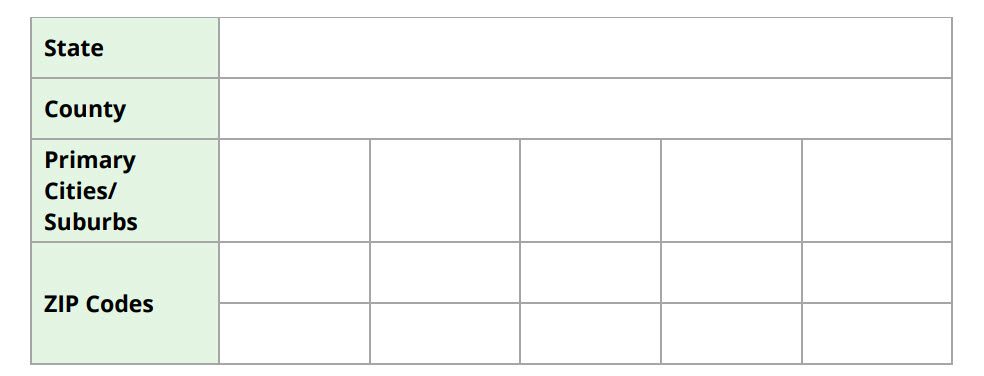
Fill-in the following table with information on your primary market…the primary area in which you sell houses. If you serve only one city then you may have only one ZIP Code.

You can do an Internet search for “zip code map for YOURCITY” and then click Images to find and print a ZIP Code map for your area. Keep the map handy.

What types of homes are available in your primary market? (check all that apply)

___ Single-family

___ Multi-family

___ Townhomes

___ High- and mid-rise condos

___ Farm and Ranch

___ Country Homes with Acreage

___ Other: ____________________

Different types of homes have different characteristics. Selling high-rise condos is different from selling single-family homes, which is different from selling farm and ranch properties. To generate the most leads, you should try to focus on the predominant type of home in your primary area (unless you want to focus on a niche).

During your first year, learn everything you can about the predominant type of home in your area. Become an expert in that type of housing. Learn the INs and OUTs of buying, selling, and living in that type of property. Have a list of home inspectors for that type of property. Your clients are going to rely on you to help them buy and sell houses, so you need some expertise in the type of product you are selling.

Study Sales Data in Your Primary Market

Use the How to Find a Profitable Target Market worksheets, and your MLS, to study your primary market based on sales data from the past 6 mths (for large areas with many sales) or 12 months (for smaller areas with fewer sales). This will give you a general understanding of your area. It will also help you to know which areas are the most and least profitable, so you don’t waste time focusing on unprofitable markets.

You do not have to analyze every type of property. If you don’t plan to handle rentals, then don’t analyze that column. If you don’t have Country Homes and Acreage, then don’t waste time on that category either. However, it never hurts to have a complete understanding on what types of properties are selling best in your area, and which ZIP Codes are selling the most.

What types of property are predominant in your area? Which areas have the most sales? Focus on no more than two property types on the next page.

Study Top One or Two Types of Property in Each ZIP Code

profitable real estate marketSometimes it is very obvious that there is only one property type with the most sales in your area. However, there could be two or more property types that have similar sales activity. Use the How to Find a Profitable Target Market worksheets to look more closely at the sales data for the top two types of property (single family, townhome, high-rise, etc.). Your objective is to find the one most profitable property type and area to focus your business during your first year.

Which ZIP Codes have the most sales? Start narrowing your focus to find a “hot” target market, but make sure it has enough activity to meet your business goals.

Study Your Secondary Market: Top Neighborhoods or Buildings

A secondary market is the top-selling neighborhoods/buildings within your primary area. Once you know the type of property and the area (such as ZIP Code) that you want to focus on, then use your MLS software to find the top-selling neighborhoods/buildings in that area.

Using your MLS, search for Solds in your chosen city or ZIP Code(s), over the past 6 to 12 months (depending on the size of the area), and then sort the MLS results by Subdivision. Then scroll through the results, and write down the names of all the neighborhoods/buildings that seem to have a high quantity of sales on the table on the next page. This will create a list of subdivisions (neighborhoods/buildings) for you to investigate in order to find the top-selling neighborhoods in your area.

Study Top-Selling Neighborhoods/Buildings

Scroll through the MLS results for Solds in the past 6 to 12 months (depending on the number of sales available in that period), for the type of property and area (city or ZIP code) that you plan to focus, and look for Subdivisions with the most sales. Write the names on the How to Find a Profitable Target Market worksheets.

Use your MLS to collect the stats for each subdivision, and write that information on the worksheets. Then copy the applicable table to a Word document so that you can sort the table in different ways (see below) to identify the top neighborhoods/buildings in your area.

Identify Top Neighborhoods/Buildings

Find the top five neighborhoods/buildings in each of the following categories:

  • Most Popular (by number of sales)
  • Luxury (by median sales price, high to low)
  • Most affordable (by median sales price, low to high)
  • Fastest Selling (by CDOM, low to high)
  • Lowest amount of Inventory (by Months of Inventory, low to high)

Think about the results and understand why. Why are certain neighborhoods the fastest selling? Why do certain neighborhoods have the lowest inventory?

– Schools? – Location? – New Construction? – Price? – Age? – View?

For help, discuss these things with a mentor or experienced agent in your office.

Evaluate Possible Farm Areas

Some agents, not all, choose to “farm” a specific neighborhood as their marketing strategy. A farm area is one specific neighborhood or building in your secondary market. Targeting a specific neighborhood/building can be a lot easier than targeting an entire city or ZIP code. It is much easier to become the “hyperlocal real estate expert” for a farm area than for a large city.

real estate target market analysisA farm area needs to be small enough that you can affordably advertise in it on a consistent basis (monthly advertising is important), but has enough active sales to be worth your attention. It should be a neighborhood/building that you will enjoy working and one that is a good match for you demographically.
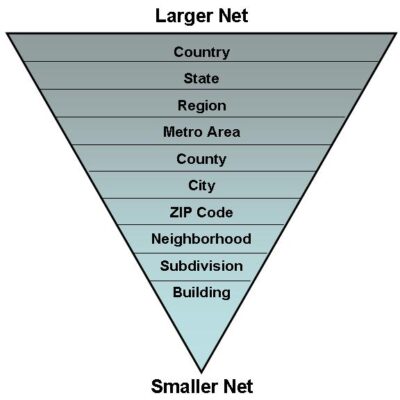
If it is a very large neighborhood or building, then you may want to start your direct mail focus on one section of about 100-200 homes first and then expand as your budget grows. Expect to spend at least $300/mth on direct mail and other advertising in the beginning of your career. Remember that it may take 10+ months of consistent, monthly advertising until you see results.

Now that you have analyzed your secondary market, do you see any specific neighborhoods/buildings that may be a good match for you to farm? Top-selling neighborhoods are often a good choice, but it depends on where you want to focus your efforts.

Possible Farm areas:

Now transfer the data from the previous worksheet for your possible farm areas on p. 7 of the How to Find a Profitable Target Market worksheets. Does one neighborhood stand out as the most likely to be profitable?

Evaluate Possible Niche Markets

Active, top-selling neighborhoods or buildings are usually the best type of target markets in real estate. However, some real estate agents may choose a “niche” market as their target market. A niche market is a specific type of home buyer or seller.

Just like farming a geographical area, targeting a specific niche can be a lot easier than targeting an entire primary market or even a secondary market. However, you need to make sure that your niche is large enough (number of Solds) to be profitable.

When selecting a niche market, you should consider your personal passions and hobbies, but also make sure that the niche exists in your market. If you love playing golf, then golf course homes may be a fun niche for you…unless you live in the middle of a large city where there are no golf course homes available. Or, if you live in a predominantly Oil & Gas area, then energy-efficient Greenies may not be a good niche market for you…even if it is one of your passions. And if you live in a retirement area with very high sales prices, then first-time home buyers may not be a good focus for you, even if you like that niche.

When choosing a niche, make sure:

  • Your niche is available in your market area.
  • You have commonalities with your chosen niche.
  • Your niche is big enough for you to meet your financial goals.
  • Your niche is a good match for you, given the demographics of your niche.
  • You have the right skillset to generate leads for your chosen niche.

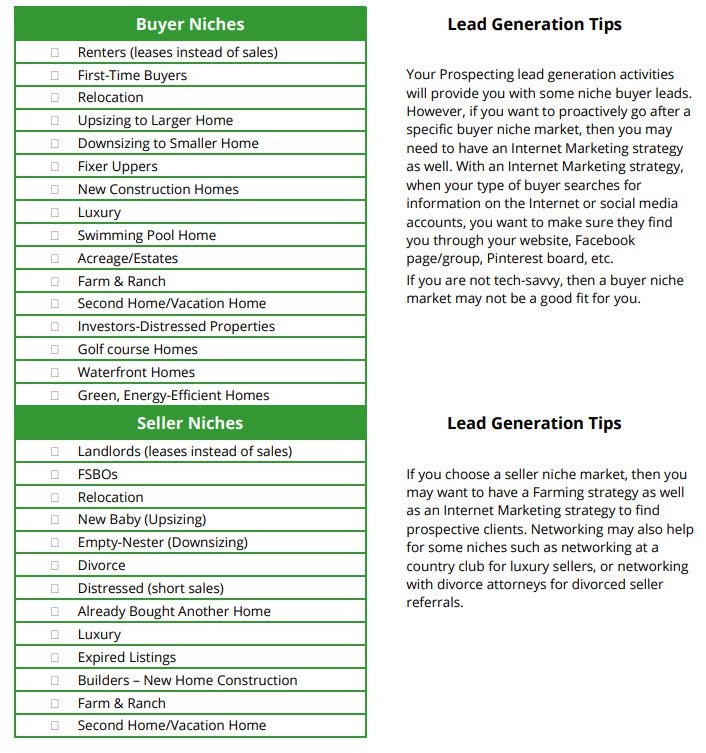
The following lists show common types of real estate niches. Check only those that you have something in common and only if they exist in your market. (If your market is downtown Atlanta, then don’t choose farm and ranch.) Keep in mind that you will need the right skillset to advertise to the type of niche market that you choose.

Niche Market Summary

You can only use the MLS to analyze some types of niches, not all of them. There is no MLS field for “first time home buyer” but there are fields for: Private Pool, New Construction Home, Golf Course Lot, etc. Use p. 9 on the How to Find a Profitable Target Market worksheets to get an idea of what’s available in your market, so you can evaluate if it may be a profitable niche.

Select a Profitable Target Market

Once you understand your market, then you should select a “target market” to focus your marketing efforts on. Of course, you will help clients buy and sell anywhere in your primary market, but that area may be too big (and expensive) to “target” your advertising efforts…especially your first year. So it is wise to select a secondary market, farm area, or niche market to set as your “target market.”

define-market-areaFor example, your target market may be:

  • One favorite neighborhood/building/subdivision (farm area)

–Or–

  • Top 5-10 selling neighborhoods in the city (secondary market)

–Or–

  • Top 5-10 selling high-rise condo buildings in a ZIP Code (secondary market)

–Or–

  • One niche market in the city (golf course homes)

–Or–

  • A combination…one farm area and one niche market

The size of your target market is important. It must be active enough (with a high number of sales) to provide enough sales in order for you to reach your business goals, but small enough for you to cover effectively. If you live in a metropolitan area, such as Chicago, you probably can’t cover the entire metro area, so you will need to “drill-down” to a secondary market, niche market, or farm area. However, if you live in a rural area, you may have to cover several small towns in your region, or an entire county, in order to meet your income goals.

Write Down Three Potential Target Markets

List the top three possible target markets for you on p. 10 of the How to Find a Profitable Target Market worksheets.

Do the Possible Target Markets Have Enough Sales?

Before you waste time focusing on a specific target market, double-check to make sure it has enough sales to support your income goals.

*Market Share Percentage: This varies depending on how much market share you think you can obtain in the neighborhood. If you think you can get 20 percent market share, then multiply the number of homes sold in that market per year by .2 (20 percent), and make sure the total is greater or equal to your goal for the number of homes you want to sell each year.

If a potential target market does not have enough annual sales to support your business goals, then you should either select a different target market or combine several neighborhoods in your target market (such as the “Top Ten Neighborhoods in YOURCITY”).

Are You a Good Match for the Target Market?

It is often said in real estate that people want to work with people they “know, like, and trust.” The more two people have in common, the more likely they will “like and trust” each other. So it is important for real estate agents to focus on markets that consist of people similar to them. For example, if you are a single, 20 year old, driving a 10 year old beat-up car, with only a high-school education, then you may have a hard time getting affluent, well-educated couples living in luxury neighborhoods and driving luxury cars to hire you. Or if you are a 60 year old who has a hard time with technology and hates to text or participate on social media, then you may not get hired by many Millennial first-time home buyers.

To make your life easier, and your career more successful, you must double-check yourself with your target market. If you are a mis-match to your chosen market, then select a different target market or discover ways to overcome the obstacles that you will face.

Research the demographics of your potential target markets and complete the table on p. 11 of the How to Find a Profitable Target Market worksheets. Some of this information may be difficult or impossible to obtain at a neighborhood or niche level, but the thought process is very helpful.

Your Target Market: ___________________________________________

Summary

Selecting the right target market is one of the most important steps in building a successful real estate business. Without the right target market, you are likely to spin your wheels, waste time, and waste money and then wonder “What’s wrong with me?” when your marketing activities don’t work.

Taking a careful study of your primary and secondary markets, as well as possible niche markets, will enable you to choose a target market that will be profitable for your business. Double-checking to make sure that there are enough sales in the target market to meet your business goals is another way to ensure that you don’t waste time on the wrong market.

Finally, it’s important to match both your target market and your marketing activities to YOUR unique personality. This will help you be more effective at marketing your business, since most people want to do business “with people they know like, and trust.” Plus, choosing the marketing activities that are a match for your personality will help prevent burnout and make it easier for you to enjoy your lead generation efforts.


how to find profitable target market in real estate
CLICK TO DOWNLOAD

DOWNLOAD WORKSHEETS

Zero in On the Right Area – Dominate Your Local Real Estate Market

Too many new agents jump into the business without a clear strategy—and end up spinning their wheels in areas with little activity or profit potential. This guide changes that.

Go through the step-by-step process with the worksheets in this guide and you’ll find the perfect target market for YOU.


Most Powerful Way of Understanding Lead Generation in Real Estate

Overview of Lead Generation in Real Estate

“Lead generation” is a phrase that real estate agents use to describe the process of advertising their business to find clients. When people talk about lead generation in real estate, they may use the following words interchangeably:

Advertising = Marketing = Prospecting = Lead Generation

Likewise, you may hear potential clients referred to in multiple ways: Leads, Prospects, Buyers, Sellers, Mets, and Unmets.

easy marketing plan template real estate
CLICK TO DOWNLOAD

Lead generation is the most important aspect of your real estate business, because it’s how you find clients. If you don’t have clients, you can’t sell houses and make money, no matter how good you are at other parts of your job. You may be the best home stager, transaction manager, and negotiator in the world, but without clients, it doesn’t matter.

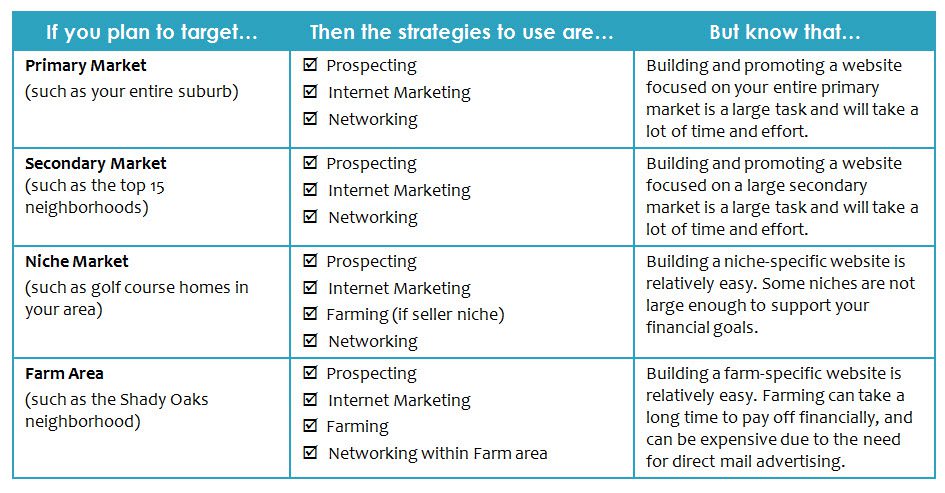
There are many individual activities you can do to generate leads, but instead of listing all the lead generation activities in one long list, it’s more effective to categorize them into four primary strategies:

  1. Prospecting
  2. Digital (Internet) Marketing
  3. Farming
  4. Networking

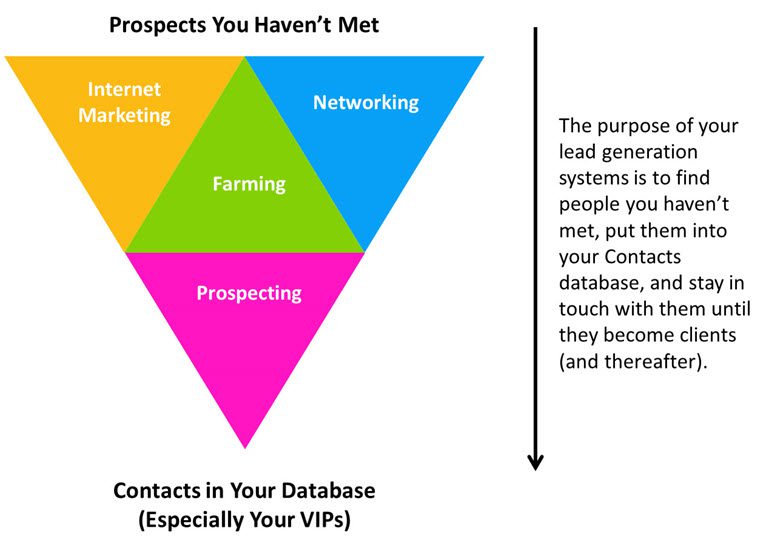
Each marketing strategy requires that you put a system in place—a collection of tools and regular activities—in order to attract leads and get their contact information into your database of Contacts. These systems are interrelated and you can think of Digital (Internet) Marketing, Farming, and Networking as a way to meet people you don’t know yet (Unmets) to put them into your Prospecting system (Mets) so you can stay in touch with them and convert them into clients.

real estate lead generation funnel

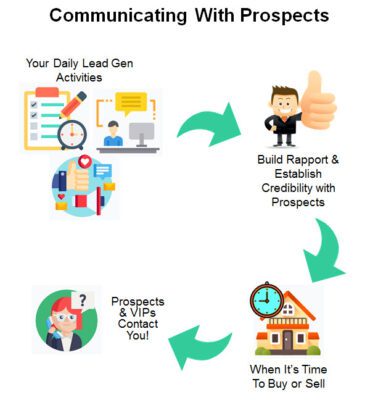
The main marketing system that ALL real estate agents need is a Prospecting System. Your Prospecting system is the core of all your lead generation activities. The main purpose of your Prospecting system is to communicate with people you already know on a regular basis, through your daily lead generation activities. Your communications should build rapport and establish your credibility with your prospects. Then, when it’s time to buy or sell real estate, your prospects will contact you because of your ongoing relationship building activities.

Check out the real stats on Why You Need a Robust Prospecting System

What’s more, as you stay in touch with your prospects, you will receive referrals from them to continually build your database of Contacts. Make sure that you always do a good job of following up on referrals and converting them into clients.

The purpose of the other three systems is to meet people and move them into your Prospecting system so you can stay in touch with them.

Understand the Four Primary Marketing Strategies for Lead Generation

Again, there are four primary marketing strategies that you can use to find clients:

  1. Prospecting your existing “Sphere of Influence” (people you already know)
  2. Digital Marketing with your own business website (attract new people)
  3. Farming a geographical area (attract new people)
  4. Networking (attract new people)

Some strategies are good for some types of target markets, while other strategies may not be. You do not need to implement all four marketing strategies. Most agents can be successful by focusing on one or two strategies…especially your first year.

You can’t do everything at once, so get proficient at one or two strategies, that best match you and your target market, and you can add other strategies later—if necessary.

Prospecting for Lead Generation in Real Estate

All agents should use Prospecting as a marketing strategy because it can be the fastest, easiest, and least expensive way to generate both buyer and seller leads. This is a process where you stay in touch with the people you already know, who live in your market area or nearby, and ask them if they know anyone else who needs a real estate agent. This is referred to as “staying top of mind” in the industry. You do this over and over again in various ways: phone calls, emails, texts, special occasion cards, lunches, social media, etc.

prospecting as a real estate lead generation system

If you already know a lot of people and have a large Sphere of Influence (SOI), then this marketing strategy may be the only method you need to build your business. However, if you have a small SOI, then you will need to use this strategy, and at least one other marketing strategy, to build your business.

Here are some challenges that you need to be prepared for with Prospecting:

  • Everyone in your SOI probably already knows several other real estate agents. They may be hesitant to offend any of their real estate agent friends (by hiring you).
  • Friends and family members may be hesitant to hire you because they don’t want you to know their financial situation.
  • People who know that you are brand-new to real estate may not feel comfortable hiring you to handle their largest financial investment…you have no real estate credibility with them—yet.

If you run into these challenges, then you will need to use one or more of the other three marketing strategies to meet new people and convert them into clients.

Farming for Lead Generation in Real Estate

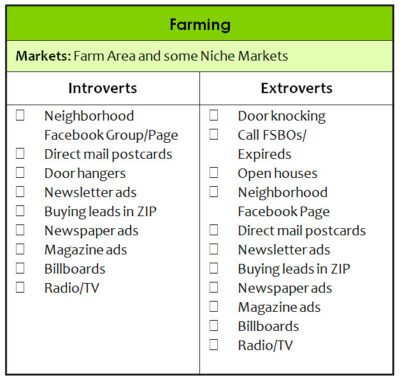
Farming is very common with real estate agents and can be effective at finding seller clients (and sellers are usually buyers as well). This is where you focus on a limited area (such as one neighborhood or building) and try to build a client-base in that area through consistently repeated activities, such as maintaining a neighborhood Facebook page, hosting open houses, door knocking, direct farming as a real estate lead generation systemmail, calling on Expireds and FSBOs in the neighborhood, etc.
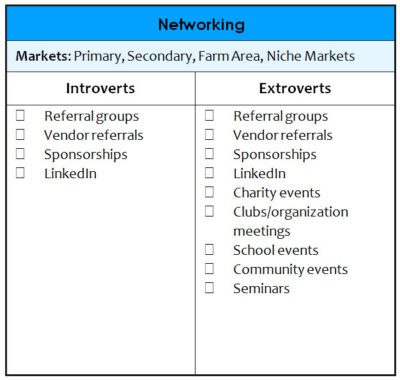
A Farm area is limited geographical area. You don’t “farm” an entire city, only a selected area. There is one exception: Farming a niche market that is house/lot type-specific. You can send direct mail to home owners who live on waterfront properties, luxury properties, golf course properties, etc. within a specific ZIP Code (for example).

Generally speaking, this method can be very effective for Extroverts (who don’t mind door-knocking or cold-calling FSBOs and Expireds) or Introverts with a large budget (because direct mail, billboards, and print advertising can be relatively expensive). However, this method can take time and greatly depends on your consistency. Don’t expect one newsletter advertisement or one direct mailing of postcards to generate a huge amount of leads. You need to consistently advertise and mail over a long period of time (at least 10 months). That’s why you may need a large budget.

At a minimum, you should plan your budget to include sending at least 200 pieces of direct mail each month for 12 months (the entire year) as part of your Farming strategy.

If you are going to Farm a target market, then you should also review your competition in that farm area. Use your MLS to search for selling agents with the most sales in your Farm area. However, don’t let competition prevent you from farming an area that is right for you! Find the weaknesses in your competitor’s strategy and then implement a strong Farming strategy of your own.

About Buying Leads

These days there are various services where you can buy leads or sign up as a recommended real estate agent, such as Zillow Premier Agent, Nextdoor, Google Screened, Market Leader, etc. Generally, these leads are for a specific area, such as a ZIP Code. So the marketing activity of “Buying leads in ZIP” is considered to be a Farming strategy, because it focuses on a specific area…even though it may be for an entire ZIP code and not just a neighborhood.


Networking for Lead Generation in Real Estate

Networking is the process of getting involved in local schools, charity events, and organizations in order to consistently meet new people. Once a new person is in your Contacts, then you will use Prospecting techniques to stay in touch with them on a regular basis.

networking as a real estate lead generation systemAnother form of Networking is working with other business owners and vendors you know and setting up informal agreements whereby you send them referral leads in exchange for them sending you referral leads. An organization that specializes in this is called BNI, Business Network International (see www.bni.com). You may want to see if there is a BNI group you can join in your area…or start one up!
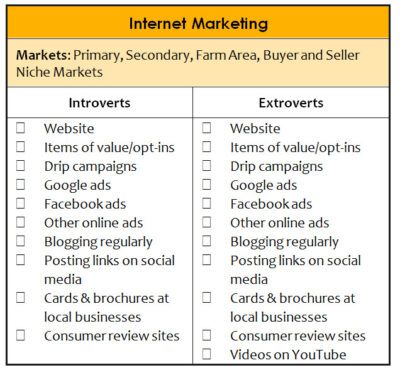
Networking can be relatively inexpensive. Attending meetings should not cost that much, although membership fees and ticket prices can certainly add up. However, you need the right personality to Network effectively. If you are super-Introverted, then attending large gatherings of strangers on a regular basis may not be suitable for you on a long-term basis. But if you have an out-going Extroverted personality (or can fake it!) then attending a few networking events each month may be a good method for building your business.

Keep in mind that attending events, by itself, is not enough to build your business. There is an “art” to Networking effectively, so read some of Ivan R. Misner’s books on the subject to maximize this method of lead generation, such as:

  • The 29% Solution
  • Networking Like a Pro
  • Business by Referral

Digital Marketing for Lead Generation in Real Estate

Digital (Internet) Marketing is a system that uses a website to offer unique Items of Value (IOVs) that people want and (hopefully) can’t find anywhere else. An example would be a “Top Places to Live In YOURMARKET” guide which is a great overview of the top neighborhoods in your area. When a prospect signs up for the guide, they willingly give you their contact information.

digital marketing as a real estate lead generation systemOnce the contact information is in the system, an autoresponder automatically emails the IOV to the prospect, and then sends “drip” emails to the prospect on a regular basis. This “drip campaign” is designed to establish your credibility and build rapport with the prospect, with the hope that they will contact you when they are ready to buy or sell.
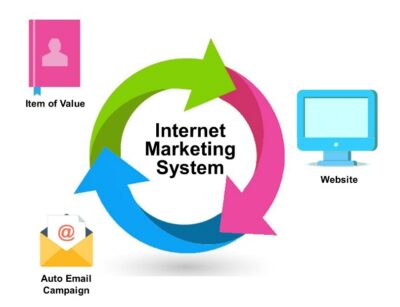
The terms “Digital Marketing” and “Internet Marketing” are used interchangeably. 🙂

This method of marketing your business takes a bit of time and effort to set up, but then it works for you 24X7, even when you sleep, for the rest of your career. It works best at attracting buyer clients, but can provide seller clients too, since most home buyers are home sellers too.

Having a website (such as a broker-provided website) that does not offer an Opt-In for an Item of Value, and is not tied to an automated drip campaign, is not an Digital Marketing System (IMS). Having accounts on Facebook, Instagram, Pinterest, and LinkedIn is not an IMS.

overview of digital marketing systemTo be a complete Digital Marketing System, you must have all three parts in place:
  1. Item of Value to offer (with sign up page)
  2. Website to advertise the IOV
  3. Automatic email (drip) campaign

Digital Marketing is relatively inexpensive (compared to print advertising and direct mail campaigns) and long-lasting. If you spend 4 hours preparing for and hosting an Open House, when you are finished, that time is gone. How many leads do you have to show for it? But if you spend 4 hours writing a web page about a specific neighborhood, then that page can generate leads for years to come.

Plus, in today’s social world, people expect high-quality, successful agents to have a great website and digital platform. They want to see you “all over the Internet” when they vet you via online searches. So this kind of marketing strategy works very well at building your reputation as the local area real estate expert.

Summary of Marketing Strategies in Real Estate

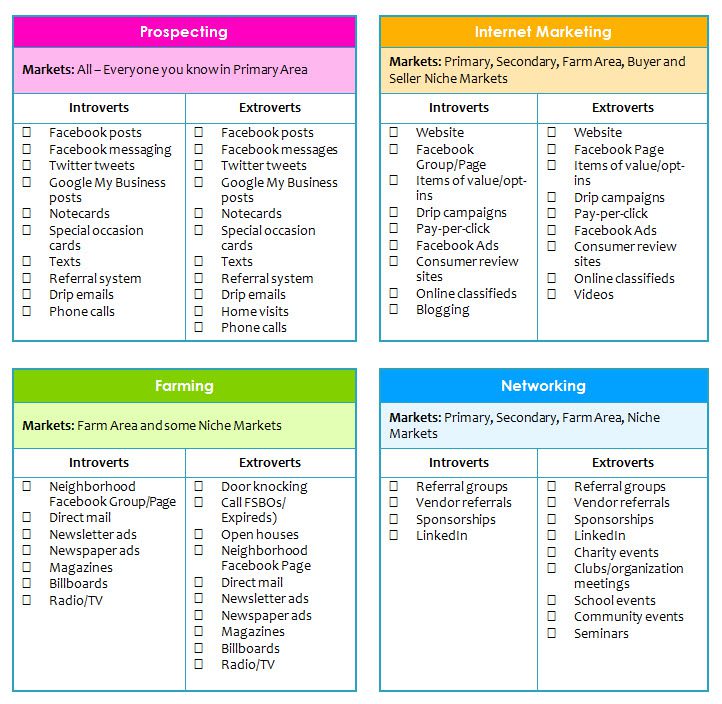
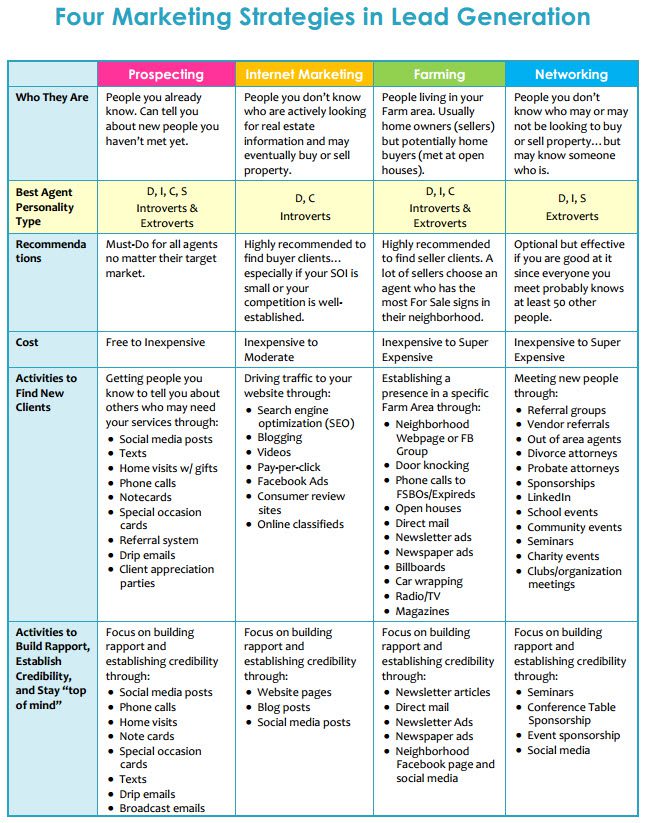
The following graphic summarizes the four primary marketing strategies to help you with lead generation in real estate.

summary of four primary real estate lead generation strategies

Keep in mind that there is no ONE perfect marketing strategy or lead generation system for all real estate agents. Some real estate agents succeed with a Farming strategy focused on open houses, while others do not. Some agents succeed with a Networking strategy focused on volunteer work at their kid’s school, while others don’t have school-aged kids and can’t use this strategy. Some agents succeed with a robust Digital Marketing strategy (like me!), while others do not.

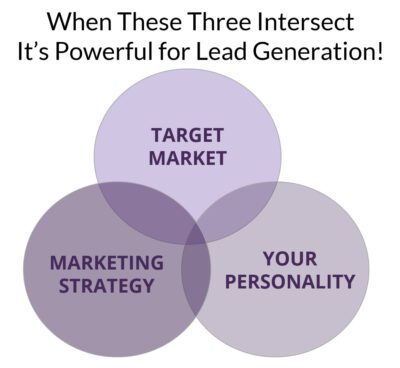
Newbie agents are often looking for that ONE perfect system. However, what you should be focused on is finding the synergistic intersection between a profitable target market in your area, matched with your unique personality and skillset, and matched with the right marketing strategy for you and that target market. When those three things intersect and work together, that results in a powerful lead generation system.

powerful lead generation

Decide On the Best Marketing Strategy for You

You don’t have to use all four marketing strategies. You should only choose the strategies that are compatible with your personality, budget, and target market. During your first year, you may only implement one or two marketing strategies, and then add another strategy next year. It’s better to get really good at one or two strategies first, and then add more later, than to try to do everything your first year.

Your Target Market: ___________________________________

If you don’t know your Target Market (which may be the most critical aspect of being successful at lead generation) then you need to take the time to analyze your market and select a PROFITABLE target market. Don’t just “wing it” on this part of your lead generation strategy. You don’t want to waste a lot of time and money on the wrong target market.

Learn How to Choose PROFITABLE Target Market

For example, you may think Farming the neighborhood where you live is a good idea. However, if your neighborhood has low turnover (such as only 10 sales a year) and you need to sell 15 houses to meet your income goals, then even if you had 100% market share, you still would not meet your goals.

Or if you choose a niche based on your personal interests, but that niche doesn’t really exist in your market area, then you will be wasting time and money.

If you truly want to be successful in real estate, then choosing a profitable target market based on real data analysis is the best way to achieve your goals.

Consider Your Personality

Your personality type should greatly influence the marketing strategies that you choose. You don’t have to do ALL the marketing activities available. Being great at just a few things can be much more effective than being mediocre at many things.

Go online right now and take a free DISC assessment as well as a free Myers-Briggs Type Indicator assessment to help determine your personality type.

Matching your personality type to the right marketing activities is useful in preventing burn-out and frustration. For example, if you choose Networking as your primary marketing strategy, but you are naturally Introverted, then you will probably burn-out very quickly. However, if you are super-Extroverted, then Networking will be an easy and natural way for you to market your business.

Consider Your Budget

Your budget will also influence the strategy you choose. If you have a very limited budget, then Farming an area with direct mail, billboards, and newspaper ads may not be possible at the beginning of your career. However, you can use some low-cost Farming techniques such as door-knocking and hosting open houses.

Consider Your Target Market

The type of target market and niche that you want to focus on will also influence the type of marketing strategy that you choose. Think about your target market and how they find information about real estate. If your market is first-time home buyer Millennials, then Digital Marketing will be a smart choice because they probably use the Internet to find information. However, if your target market is retirees looking to downsize, then Digital Marketing may not be effective (since that market may not be likely to use the Internet to find you).

Learn How to Choose PROFITABLE Target Market!

about four primary real estate lead generation strategies


Choose Your Marketing Activities

After you select the best marketing strategies for you and your target market, then you should decide which marketing activities you want to implement your first year. For example, if you plan to target the First-Time Home Buyer niche, they are probably Millennials, so you will need to use social media activities in the Prospecting strategy as well as implement an Digital Marketing campaign that targets first-time home buyers in your area. If your target market is FSBO sellers, then you will need a strong Farming campaign, but you may not be able to afford Radio/TV ads yet.

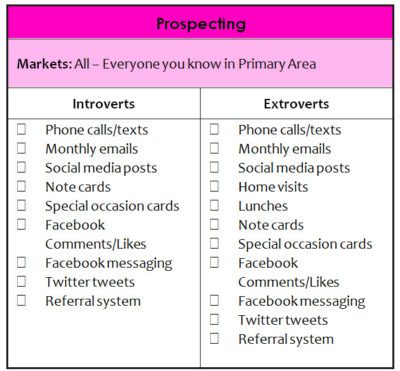
Think about your target market as you go through the following tables and check off the specific lead generating activities that you can implement this year, that match your personality (Introvert or Extrovert) and your budget.

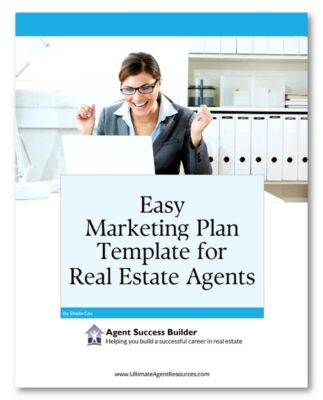
Once you have chosen a profitable target market, decided on your marketing strategy, and determine the list of marketing activities that you want to implement, DOWNLOAD the Easy Marketing Plan Template for Real Estate Agents and fill it out. It will help you plan the steps you need to take to set up your marketing systems. Then you will know exactly what you need to do to set up a marketing strategy (lead generating system) that actually works: Generating leads and converting them into clients.

Summary

When you’re trying to grow your real estate business, lead generation in real estate is one of the most important skills that you should master. You’ll need reliable systems that help you meet new people, stay in touch, and turn into clients.

Our unique way of teaching lead generation in real estate organizes all the possible 100+ lead generation activities into four major strategies—Prospecting, Digital Marketing, Farming, and Networking—so you can choose the right fit based on your personality, budget, and target market.

Not every strategy is right for every agent, so the key is choosing one or two approaches that match YOUR unique strengths. That way you won’t burn out like you will if you try to force yourself to do things that aren’t a good match. Whether you’re an introvert or an extrovert, on a tight budget or ready to invest, there’s a lead generation system that will work for you. The sooner you focus on building the right system, the faster you’ll start attracting clients and closing deals.

Use our Easy Marketing Plan Template for Real Estate Agents to create a marketing plan that will actually grow your real estate business.


easy marketing plan template real estate


DOWNLOAD TEMPLATE

From Guessing to Growing: Create a Real Estate Marketing Strategy That Delivers

This Easy Marketing Plan Template gives you a guided structure for choosing the right lead-generation strategies, aligning your marketing with your income goals, and developing a marketing plan that will help you on the path to success.

how to write real estate agent bio

Crafting the Perfect Real Estate Agent Bio–Stand Out, Get Noticed, Win More Clients

Why Your Real Estate Agent Bio Profile Matters

Creating a compelling real estate agent bio/profile is one of the most important marketing steps you can take as a new or seasoned professional. Whether you’re building a presence on Zillow, your brokerage’s website, or a Google Business Profile, your agent bio tells potential clients who you are, what you value, and why they should trust you with their real estate journey.

Your real estate bio/profile is more than a short biography—it’s your digital handshake. In a world where buyers and sellers start their agent search online, your profile might be the first impression they have of you. A generic, poorly written bio can signal inexperience or lack of effort. In contrast, a professional and personal profile builds immediate trust and makes you stand out in a crowded market. It gives readers insight into your background, local expertise, personality, and commitment to service. Whether they’re researching you on Google, LinkedIn, or your brokerage website, your profile helps them decide whether they want to work with you.

Start with Your Target Market in Mind

How to Write Profile for Real Estate Agents
CLICK TO DOWNLOAD

Before writing a single sentence, get clear on who you’re writing for. Are you targeting first-time buyers, investors, military families, or luxury home clients? Your profile should speak directly to their needs, concerns, and goals. Think about what that audience values: neighborhood knowledge, fast communication, a caring personality, or negotiation skills. Instead of trying to appeal to everyone, focus your message on the clients you want to attract most. This helps you create a profile that feels personalized and focused, not generic. For example, if you work primarily with relocating families, emphasize your area expertise, local school insights, and smooth transition processes.

Structure Your Profile for Clarity and Flow

A strong real estate bio should follow a logical structure that helps the reader understand your background and value. Start with a one-sentence summary of who you are and what you specialize in. Then briefly explain your real estate experience or what drew you to the industry. If you are a new agent, mention any prior careers or skills that make you especially suited to serve clients. Include some personal touches such as hobbies, volunteer work, or local involvement. End with a statement of what clients can expect from working with you. Use short paragraphs and avoid overloading the reader with too many credentials or buzzwords—be clear, honest, and warm.

Add Local Flavor and Personal Passion

Buyers and sellers want an agent who knows and loves the area they serve. Mention how long you’ve lived in the community, what you enjoy about the neighborhoods, and why you chose to build your business there. If you have favorite parks, schools, or businesses, share that. Your passion for your market area adds credibility and makes you more relatable. Personal details—such as raising a family locally, volunteering at community events, or serving on a school board—can build trust and emotional connection. Clients don’t just want a transaction—they want a guide who understands the community they’re joining or leaving.

real estate agent profileInclude Key Skills, Awards, and Credentials

While you don’t want to turn your bio into a résumé, it’s important to highlight professional credentials. Mention any awards, designations, certifications, or years of experience. Skills like negotiation, home staging, tech-savviness, or bilingual fluency are valuable differentiators. If you’re a newer agent, highlight past professional experience that shows your reliability and service mindset. Were you in sales, education, or project management? These roles often translate well to real estate. Make sure to include your license number if required by your state or brokerage, and always double-check for accuracy and compliance.

Use a Consistent Voice Across All Platforms

Your real estate bio will appear in many places—your website, Facebook page, LinkedIn, and more. While you can slightly tailor each one to the platform, keep the overall tone and content consistent. Use the same tagline, contact information, and social links. This consistency reinforces your brand and makes it easy for people to recognize and trust you online. You may want to write a long version of your profile for your website and a shorter version (about 3–4 sentences) for social media accounts. Just be sure the core message remains the same.

Create a Tagline That Captures Your Value

A tagline is a short, memorable phrase that summarizes your real estate philosophy or promise to clients. It should be professional, unique, and relevant to your niche. Examples include “Your Local Lakefront Specialist,” “Helping First-Time Buyers Every Step of the Way,” or “Houston Homes, Heartfelt Service.” You can use this tagline on your business cards, email signature, and social media bios. It helps build brand recognition and gives clients an immediate sense of what you offer. Avoid clichés or vague phrases—focus on real value that resonates with your audience.

Proofread and Get Feedback

After drafting your bio, step away for a few hours before proofreading. Look for grammatical errors, awkward phrasing, or sentences that don’t flow. Read it aloud to make sure it sounds natural and conversational. Ask a mentor, broker, or trusted colleague to review it and offer suggestions. You want your bio to sound professional but still feel like you. If it feels stiff or overly formal, revise until it sounds more human. Authenticity wins in real estate—people want to work with someone who feels approachable and trustworthy.

Final Thoughts: Your Bio Is a Marketing Tool—Use It Wisely

Your real estate profile is not just about listing facts—it’s a tool to build trust, showcase personality, and attract your dream clients. Put real thought into it, update it regularly, and make sure it reflects both your professionalism and passion. When done right, your bio becomes a magnet for leads, referrals, and repeat business. Treat it as a core part of your marketing strategy—and make sure it evolves with you as your brand grows.


How to Write Profile for Real Estate Agents

DOWNLOAD TEMPLATE

Make Your First Impression Count—Craft a Profile That Sells Your Expertise

This guide walks you through a fill-in-the-blank template to write a clear, engaging, and professional profile that reflects your unique personality, local expertise, and value to your target market.

Use this profile when setting up your profile on real estate related websites as well as your social media accounts.